Best smart telescope under $500: 2 picks and a $549 stretch
Two smart telescopes cost less than $500 in the US: here is which one to buy, and when $549 is the better deal.
DWARFLAB DWARF mini8.2/10Read the review
Two smart telescopes sell for less than $500 in the US right now: the ZWO Seestar S30 at $399 and the DWARFLAB DWARF mini at $419 (official US stores, November 9, 2026). Both find their targets on their own, track the sky and stack color images on your phone, so neither one asks you to learn the sky first. If you can stretch to $549, the DWARF 3 and the Seestar S50 add a better sensor or more aperture, and for many buyers that extra $130 is the smartest money in the whole purchase.
The two smart telescopes under $500
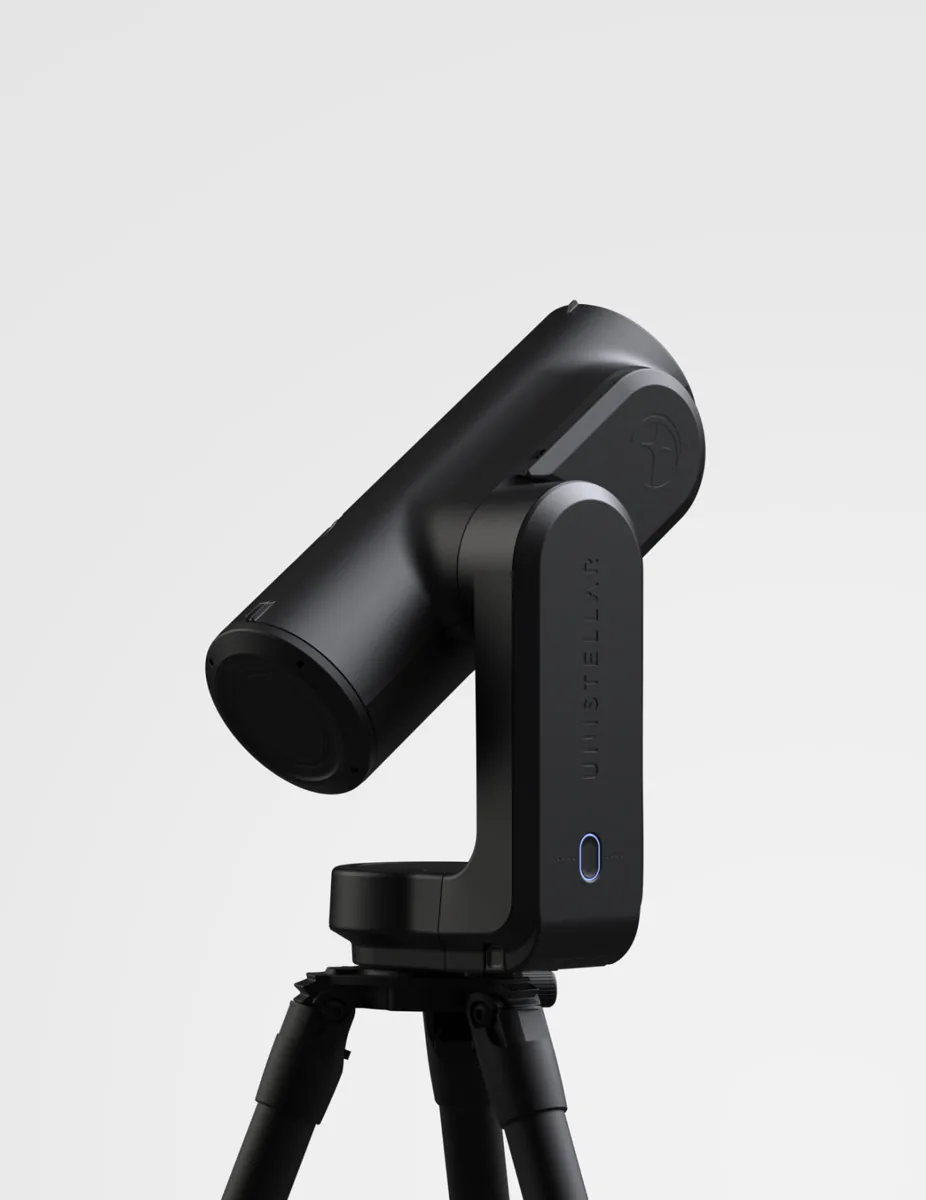
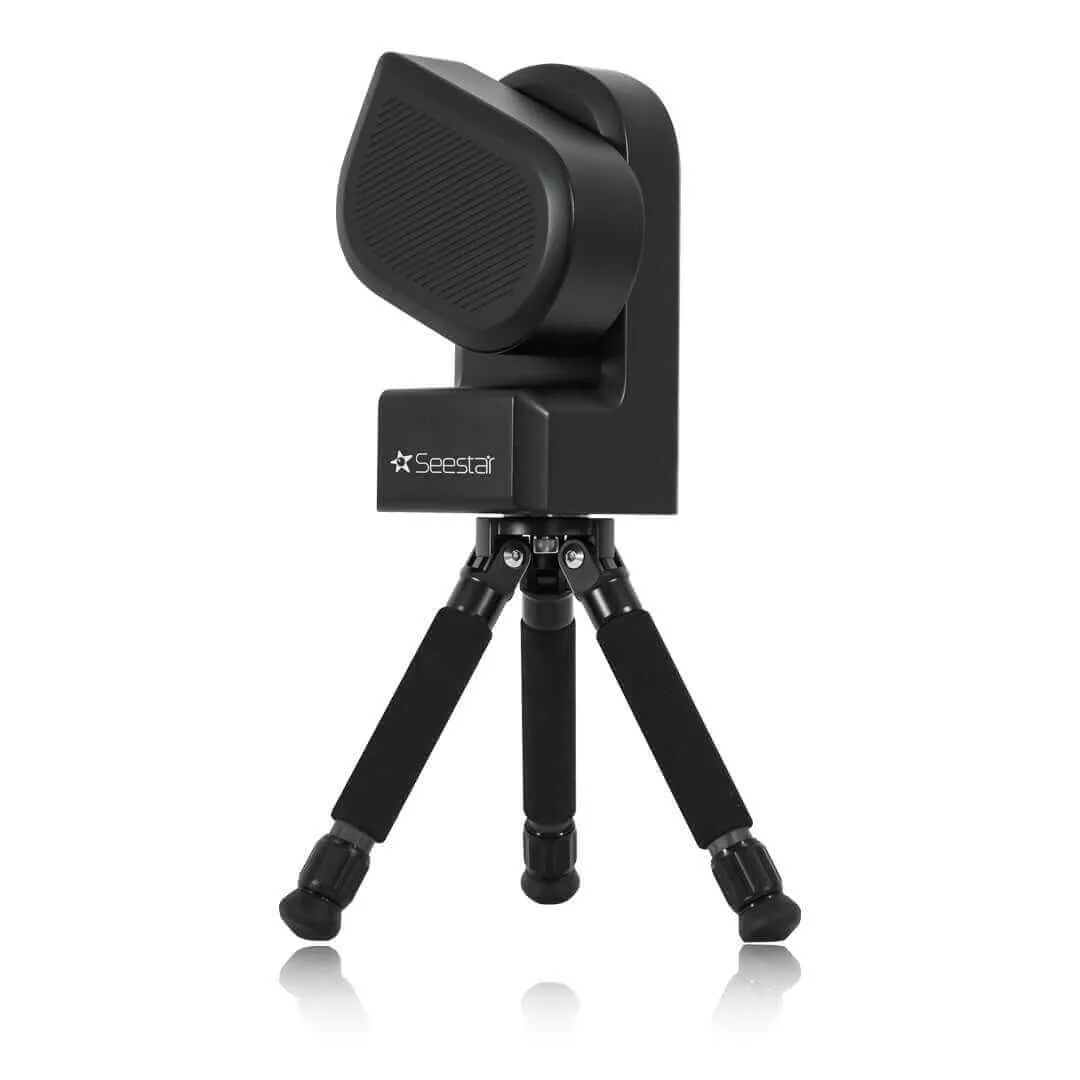
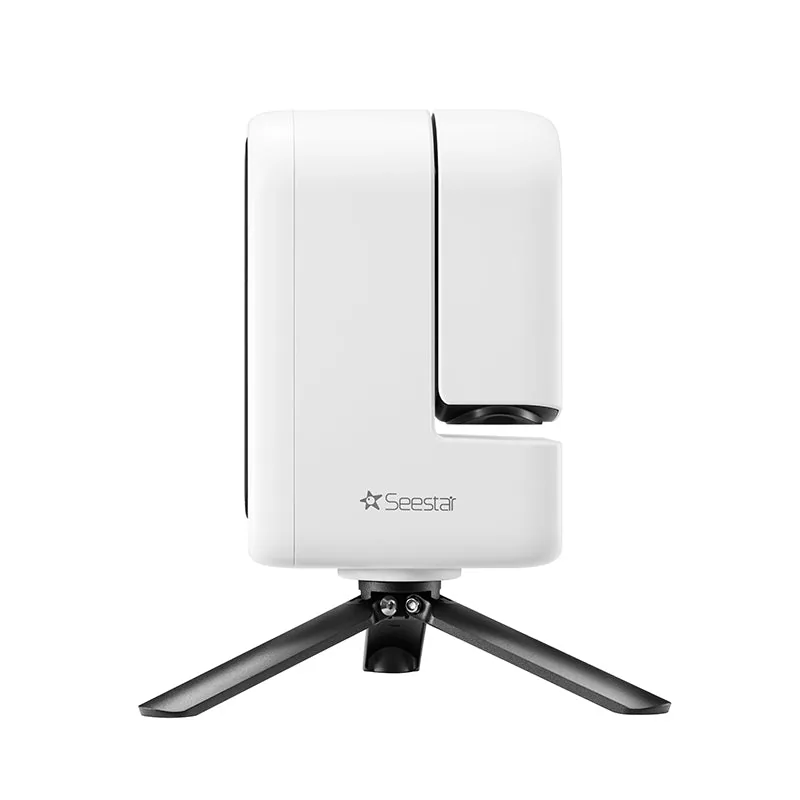
The Seestar S30 is the cheapest way into a real smart telescope. ZWO pairs a 30 mm apochromatic triplet with ED glass and a 150 mm focal length with a Sony IMX662 sensor, then adds a second wide-angle camera with a 23.2° field for framing. The UV/IR-cut, duo-band (OIII 30 nm / Hα 20 nm) and dark filters are built in, a magnetic solar filter is listed as the external filter, and the mount supports Equatorial Mode. It weighs 1.65 kg, stores 64 GB and carries ZWO's 2-year warranty.
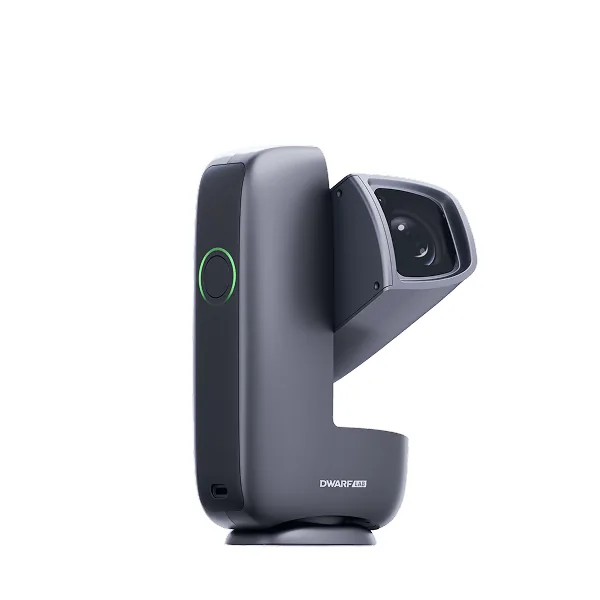
The DWARF mini is the one you can take everywhere. At 840 g it is the lightest smart telescope in our data, about half the weight of the S30. Its telephoto uses the same IMX662 sensor and 150 mm focal length, with a dual-narrowband filter (493 nm / 656 nm) built in, a wide camera, exposures of up to 90 seconds and an equatorial mount mode. DWARFLAB states 4 hours of battery life from its 7,000 mAh cell, and an ND filter comes in the box.
| Seestar S30 | DWARF mini | |
|---|---|---|
| Checked US price | $399 (sold out on Nov 9) | $419 |
| Our score | 8.3/10 | 8.2/10 |
| Aperture / focal length | 30 mm / 150 mm | 30 mm / 150 mm |
| Sensor | Sony IMX662, 2.1 MP | Sony IMX662, 2.1 MP |
| Image scale | 4.02″ per pixel | 3.99″ per pixel |
| Telephoto field | 2.46° | 2.45° diagonal |
| Light pollution filter | Duo-band, built in | Dual-narrowband, built in |
| Weight | 1.65 kg (3.6 lb) | 0.84 kg (1.9 lb) |
| Battery | 6,000 mAh, runtime not stated | 7,000 mAh, 4 h stated |
| Tripod | Not stated on the US page | Not included |
Seestar S30 or DWARF mini: how to pick
Because the telephoto specs are almost identical, the images you can expect from each are close, and the choice comes down to everything around the camera. Here is how we would decide.
- Pick the Seestar S30 if you want the lowest price and the option to grow: Equatorial Mode works with ZWO's TH10 head, and the S30 Pro and S50 share the same app if you upgrade later.
- Pick the DWARF mini if it has to fit in a daypack or a carry-on, if you want a battery figure you can plan around (4 hours), or if the S30 is still out of stock when you order.
- Pick neither if planets are the main goal: at about 4″ per pixel, Jupiter and Saturn stay tiny on both. Our planet ranking explains what it takes.
What a $400 smart telescope shows, and what it does not
Thirty millimeters is a small aperture. A 50 mm telescope gathers about 2.8 times more light, so a 30 mm model needs longer stacking to pull a faint target out of the background. That said, the wide field of these two is a real strength: large targets such as the Orion Nebula, the Pleiades, the Andromeda Galaxy or the North America Nebula fit comfortably, and they are exactly the objects that make people fall for this hobby.
- Great: the Moon, bright emission nebulae (Orion, Lagoon, Rosette), big star clusters, the Andromeda Galaxy, comets when one is bright.
- Possible with patience: fainter nebulae and the brighter galaxies, ideally on moonless nights and away from direct lights.
- Small: planets. You will see Saturn's shape and Jupiter's disc, not much detail.
When to stretch to $549
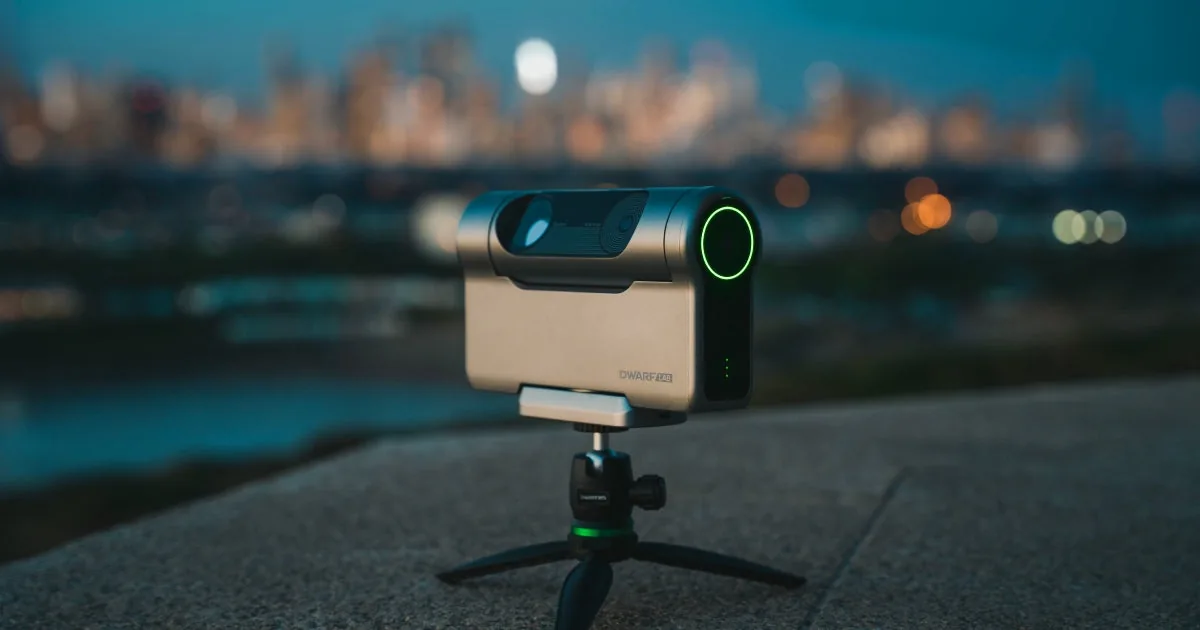
For $130 to $150 more, two telescopes move up a full step. The DWARF 3 keeps a light 1.35 kg body but gets a 35 mm lens, a Sony IMX678 Starvis 2 sensor at 8 MP, a 2.75″ image scale, three built-in filters including a dual-narrowband one, exposures of up to 60 seconds, IP54 protection and a magnetic solar filter in the box. DWARFLAB states up to 5.5 hours of astrophotography per charge.
The Seestar S50 takes the other road: 50 mm of aperture, so roughly 2.8 times the light of the 30 mm models, with a 2.42″ image scale and the same built-in duo-band filter. Its sensor is an older 2.1 MP IMX462 and it weighs 2.5 kg. Like the S30, it was shown as sold out on the Seestar US store on November 9, 2026.
| What the extra money buys | DWARF 3 ($549) | Seestar S50 ($549) |
|---|---|---|
| Score | 8.6/10 | 8.6/10 |
| Aperture | 35 mm | 50 mm |
| Sensor | 8 MP (IMX678) | 2.1 MP (IMX462) |
| Image scale | 2.75″ | 2.42″ |
| Weight | 1.35 kg | 2.5 kg |
| Battery | Up to 5.5 h stated | 6,000 mAh, runtime not stated |
The two are compared line by line in our DWARF 3 vs Seestar S50 head-to-head, and both sit near the top of our best smart telescopes under $1,000.
The real cost of the first night
The sticker price is not quite the full bill. The extras below come from the makers' US stores on November 9, 2026, and they are the ones worth budgeting before you click buy.
| Model | Price | Extras worth budgeting |
|---|---|---|
| Seestar S30 | $399 | TH10 head + TC20 tripod for Equatorial Mode: $189 |
| DWARF mini | $419 | Mini tripod $89, bag $39 |
| DWARF 3 | $549 | Mini hydraulic tripod: $89 |
| Seestar S50 | $549 | TH10 head for Equatorial Mode: $99 |
Our verdict under $500
If your ceiling really is $500, buy the DWARF mini when you want the lightest, grab-and-go option with a stated battery life, and the Seestar S30 when you find it in stock and like the idea of growing inside the Seestar range. Both will show you color nebulae from your own yard on the first clear night.
If you can find another $130, the DWARF 3 is the better long-term telescope at this level, and it is in stock. Still unsure? Put any three models side by side in our comparison tool, or start from the beginner ranking, where all six models under $1,000 appear.
Figures from official manufacturer pages and US prices checked on November 9, 2026. Images: manufacturers. How we score: see our methodology.
Our selection
Three rated telescopes mentioned in this guide, at checked prices.
Frequently asked questions
What is the cheapest smart telescope?
In our data, the ZWO Seestar S30 at $399 on the Seestar US store (checked November 9, 2026), followed by the DWARFLAB DWARF mini at $419.
Is a $400 smart telescope worth it?
Yes, if you want color images of nebulae, clusters and the Moon without learning to find objects by hand. It is not the right buy if planets are your main interest: 30 mm of aperture keeps them small.
Can a smart telescope under $500 see planets?
It can show Jupiter as a small disc and Saturn's ring shape, but with an image scale around 4″ per pixel, there is little detail. Planet detail starts with larger, more expensive models.
Do I need to buy a tripod?
DWARFLAB does not include one with the DWARF mini or DWARF 3; its mini tripod costs $89. ZWO's US page for the S30 does not list a tripod in the box, so check the listing before you order.
Seestar S30 or DWARF mini for travel?
The DWARF mini: it weighs 840 g against 1.65 kg for the S30, and DWARFLAB states a 4-hour battery life.