Nebulae: the showpieces
Emission nebulae glow in the red light of hydrogen (Hα) and the green-blue light of oxygen (OIII). That is exactly what the dual-band filters in Seestar and DWARFLAB telescopes let through, which is why the Orion Nebula, the Lagoon, the Rosette, the Heart and Soul or the North America Nebula are the targets people photograph first. Through a classic eyepiece they look gray; on a smart telescope they appear in color after a few minutes.
Planetary nebulae such as the Ring (M57) and the Dumbbell (M27) are smaller, so they reward aperture and a fine image scale. Reflection nebulae and dark dust lanes are fainter and benefit from dark skies more than from filters.
Galaxies: bigger than you think, fainter than you hope
The Andromeda Galaxy (M31) spans about three degrees in the sky, six times the width of the full Moon. It fits whole in the 4.6° field of the Seestar S30 Pro or the 3.38° field of the DWARF 3, while narrower telescopes need a mosaic. Smaller galaxies like the Whirlpool (M51), Bode's (M81) or the Sombrero (M104) are a few arcminutes across, so aperture and image scale decide how much structure you get.
Galaxies emit light across the spectrum, so a dual-band filter does not help them much. Darker skies and longer stacking do. Our light pollution guide explains what each Bortle class allows.
How much fits in the frame
Field of view is the most underrated spec. A wide field forgives small tracking errors and frames large nebulae; a narrow field shows small objects bigger. Here are the native telephoto fields stated by each maker, and what that means in practice. Try any pair in our field of view tool.
| Telescope | Native field | Fits whole |
|---|---|---|
| Seestar S30 Pro | 4.6° (diagonal) | Andromeda, Pleiades, North America Nebula |
| DWARF 3 | 3.38° (diagonal) | Andromeda, Orion's sword, Pleiades |
| Vaonis Vespera 3 | 2.5° × 1.4° | Orion Nebula, Lagoon, Moon; Andromeda in mosaic |
| Seestar S50 | 0.73° × 1.29° | Orion Nebula, Moon; Andromeda in mosaic |
| Celestron Origin Mark II | 1.32° × 0.75° | Orion Nebula core, Ring Nebula, galaxy groups |
| Unistellar Odyssey | 0.56° × 0.75° | Planets, small galaxies, the Moon (just) |
The Moon, the Sun and the planets
The Moon is half a degree wide, so it fits in almost every frame and shows craters, mountains and the terminator line beautifully. Seestar and DWARFLAB include a solar filter in the box for sunspots and eclipses; Unistellar and Vaonis sell one separately.
Jupiter and Saturn are tiny: about 30 to 50 arcseconds. On a telescope at 4″ per pixel, Jupiter covers roughly ten pixels; at 1″ per pixel, around forty. That is why the Unistellar eQuinox 2 and Odyssey lead our planet ranking, and why the small Seestar and DWARF models show the planets as bright dots with a hint of bands or rings.
SafetySolar observing is only safe with the solar filter designed for your telescope, fitted before the telescope points at the Sun.
A starter target list by season
For observers in the Northern Hemisphere, here is a short list of classic targets that every smart telescope in our comparison can frame, at least as a mosaic. The best time is when the target is high in the sky, away from the horizon haze.
| Season | Nebulae and clusters | Galaxies |
|---|---|---|
| Winter | Orion Nebula (M42), Rosette Nebula, Pleiades (M45) | Few bright ones: start with nebulae |
| Spring | Beehive Cluster (M44) | Bode's and Cigar galaxies (M81, M82), Whirlpool (M51), Leo Triplet |
| Summer | Lagoon (M8), Eagle (M16), Veil Nebula, Dumbbell (M27) | Milky Way core fields toward Sagittarius |
| Autumn | Heart and Soul nebulae, Double Cluster | Andromeda (M31), Triangulum (M33) |
How long each target takes
| Target type | First recognizable image | Worth leaving it |
|---|---|---|
| Moon, Sun (filtered) | Seconds | No stacking needed |
| Bright nebula (Orion, Lagoon) | 1 to 3 minutes | 20 to 60 minutes for color and detail |
| Bright galaxy (Andromeda) | 3 to 5 minutes | 30 minutes to several hours |
| Small galaxy (M51, M81) | 5 to 10 minutes | An hour or more, or several nights |
These are typical orders of magnitude for live stacking, not promises: transparency, moonlight and light pollution change everything. The DWARF 3, DWARF mini and Vespera Pro 2 can also stack across several nights to go deeper.
TipAvoid the days around the full Moon for galaxies: moonlight brightens the whole sky, and no filter fixes that for broadband targets.
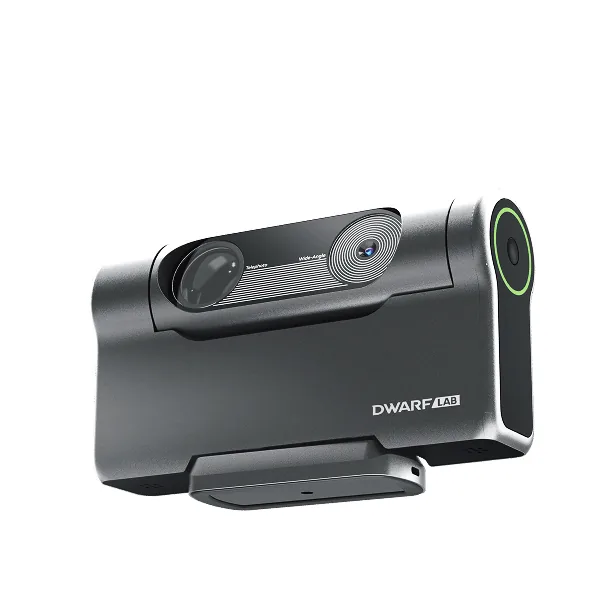
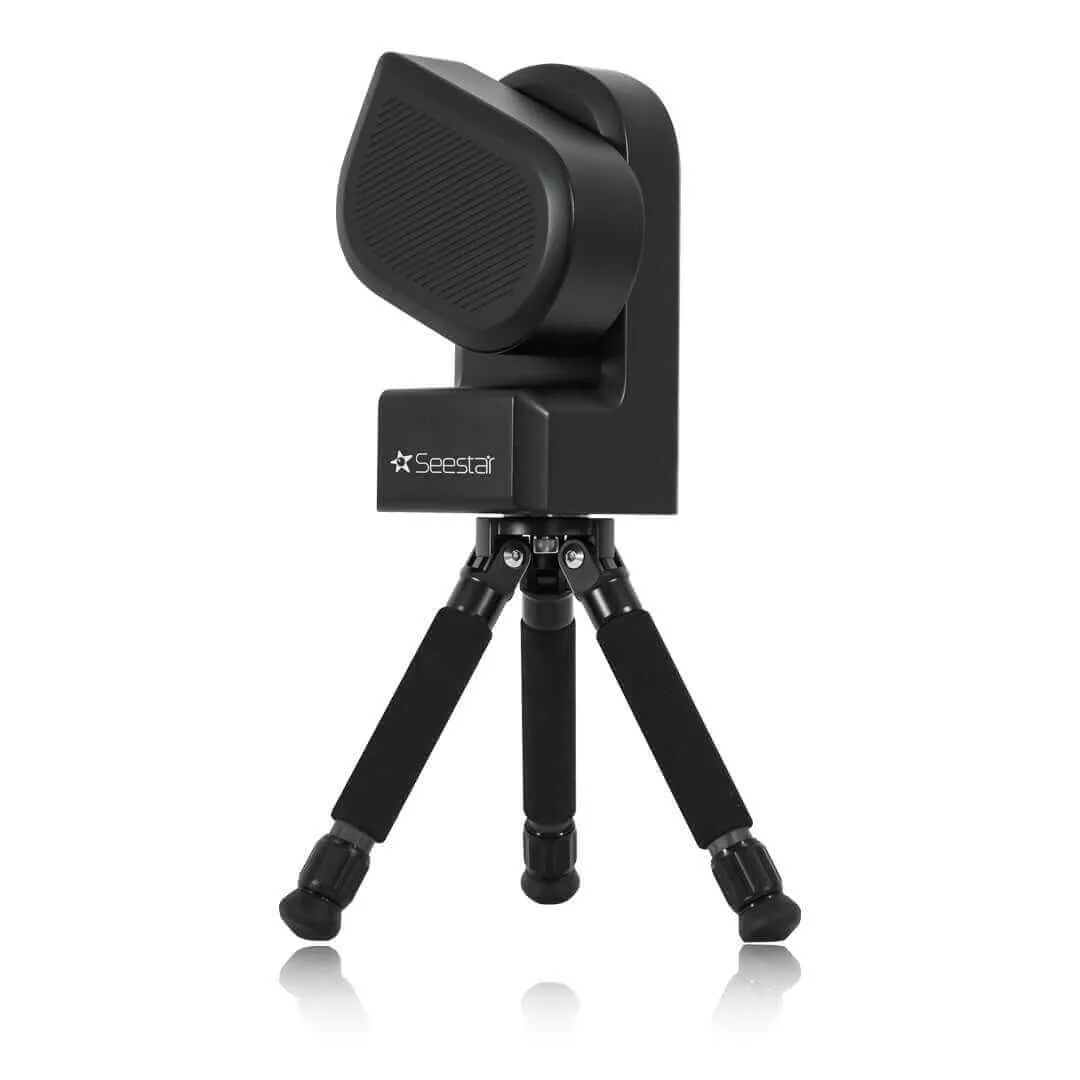
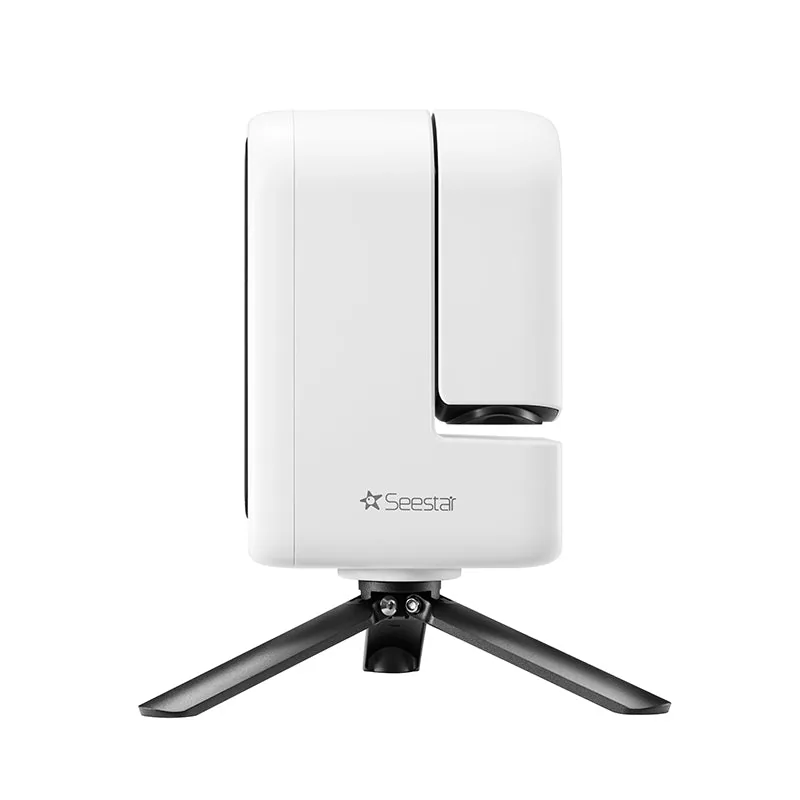
Telescopes mentioned in this guide
Frequently asked questions
Can you see galaxies with a smart telescope?
Yes. The Andromeda, Triangulum, Bode's and Whirlpool galaxies are classic targets. Large galaxies work on every model; small ones benefit from aperture and dark skies.
Can you see planets with a smart telescope?
Yes, but they are small. Jupiter's bands and moons and Saturn's rings are visible; fine detail needs a large aperture and a fine image scale, as on the Unistellar models and the Celestron Origin.
Can you see the Milky Way with a smart telescope?
Models with a wide-angle camera, such as the Seestar S30 Pro and S50 Pro, offer one-tap Milky Way modes. You still need a dark sky to see the Milky Way well.
Do smart telescope images look like Hubble pictures?
No. They look like good amateur photos of the same objects. Makers show their best results on their sites, often after hours of stacking under dark skies; ZWO reminds buyers that results vary with conditions.