Best smart telescope for light pollution: 3 city picks
A built-in dual-band filter changes everything under a bright sky: the three smart telescopes we would set up in town.
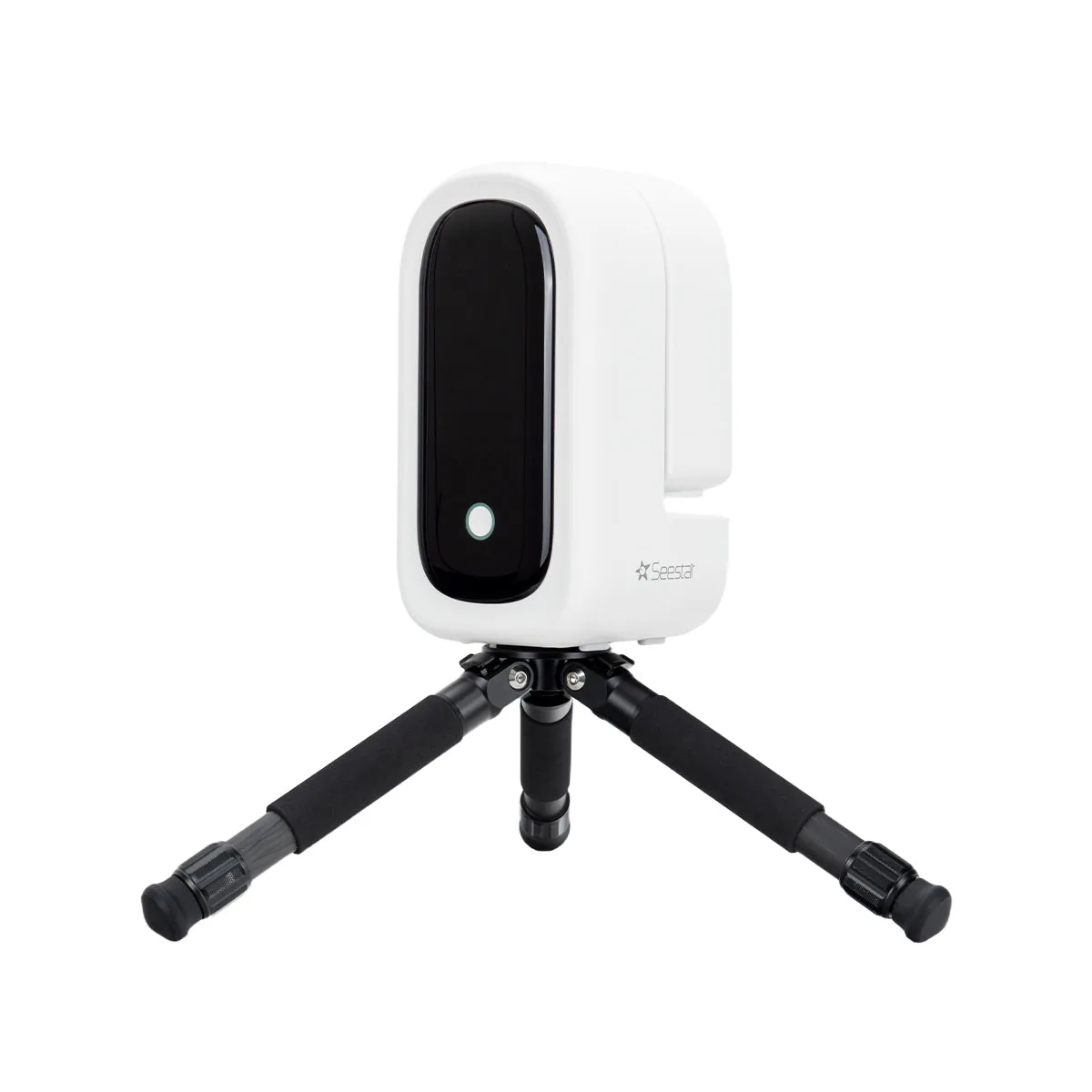
ZWO Seestar S50 Pro8.8/10Read the review
From a city or a bright suburb, choose a smart telescope with a dual-band filter built in. It keeps the red and green-blue light that emission nebulae give off and drops much of the streetlight glow, at the tap of a button in the app. In our data, every Seestar and DWARFLAB model has one; Vaonis sells it as an option, the Celestron Origin has a filter drawer, and Unistellar offers none. Our three picks for bright skies are the Seestar S50 Pro, the DWARF 3 and the Seestar S30 Pro.
Why a bright sky is less of a problem than you think
With a classic telescope, light pollution is brutal: the eye sees a gray sky and a fainter gray smudge on top. A smart telescope works differently. It takes many short exposures, aligns them and adds them together, so the faint, steady light of a nebula keeps building while random noise averages out. The sky glow is still there, but the software can subtract a smooth background far better than your eye can.
The second weapon is the filter. Emission nebulae shine at a few precise wavelengths, mainly hydrogen-alpha (around 656 nm) and oxygen III (around 500 nm). A dual-band filter lets those two narrow slices through and blocks most of the rest, which is where streetlights and the general orange glow of a city sit. That is why, under the same suburban sky, a filtered image of the Orion Nebula can look rich and red, while the Andromeda Galaxy stays pale.
The filter question, brand by brand
| Brand | Light pollution filter | In practice |
|---|---|---|
| ZWO Seestar | Duo-band built in (OIII 30 nm / Hα 20 nm) | Switched from the app, nothing to buy |
| DWARFLAB | Dual-narrowband built in (DWARF 3: 500.7 / 656.3 nm; DWARF mini: 493 / 656 nm) | Switched from the app, nothing to buy |
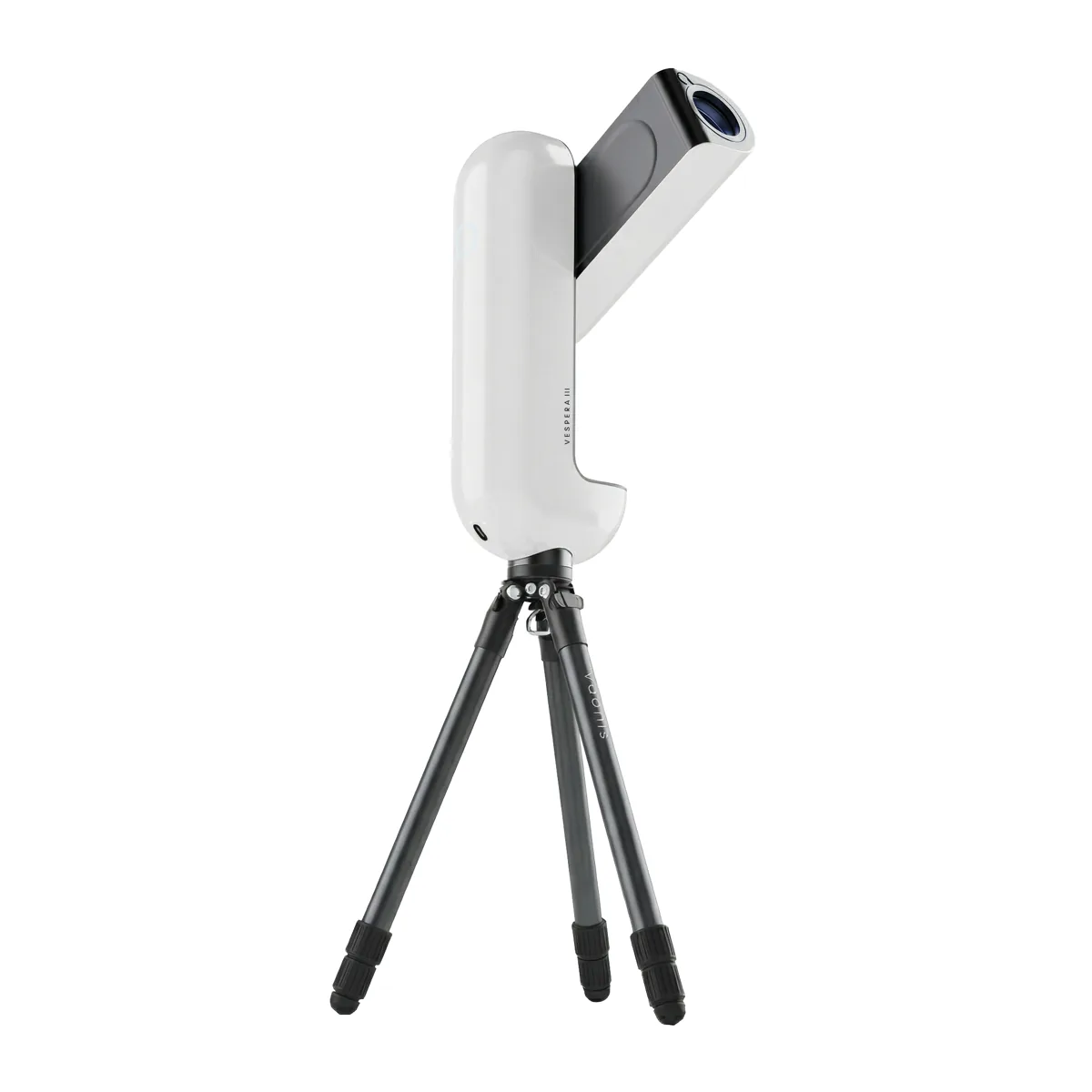
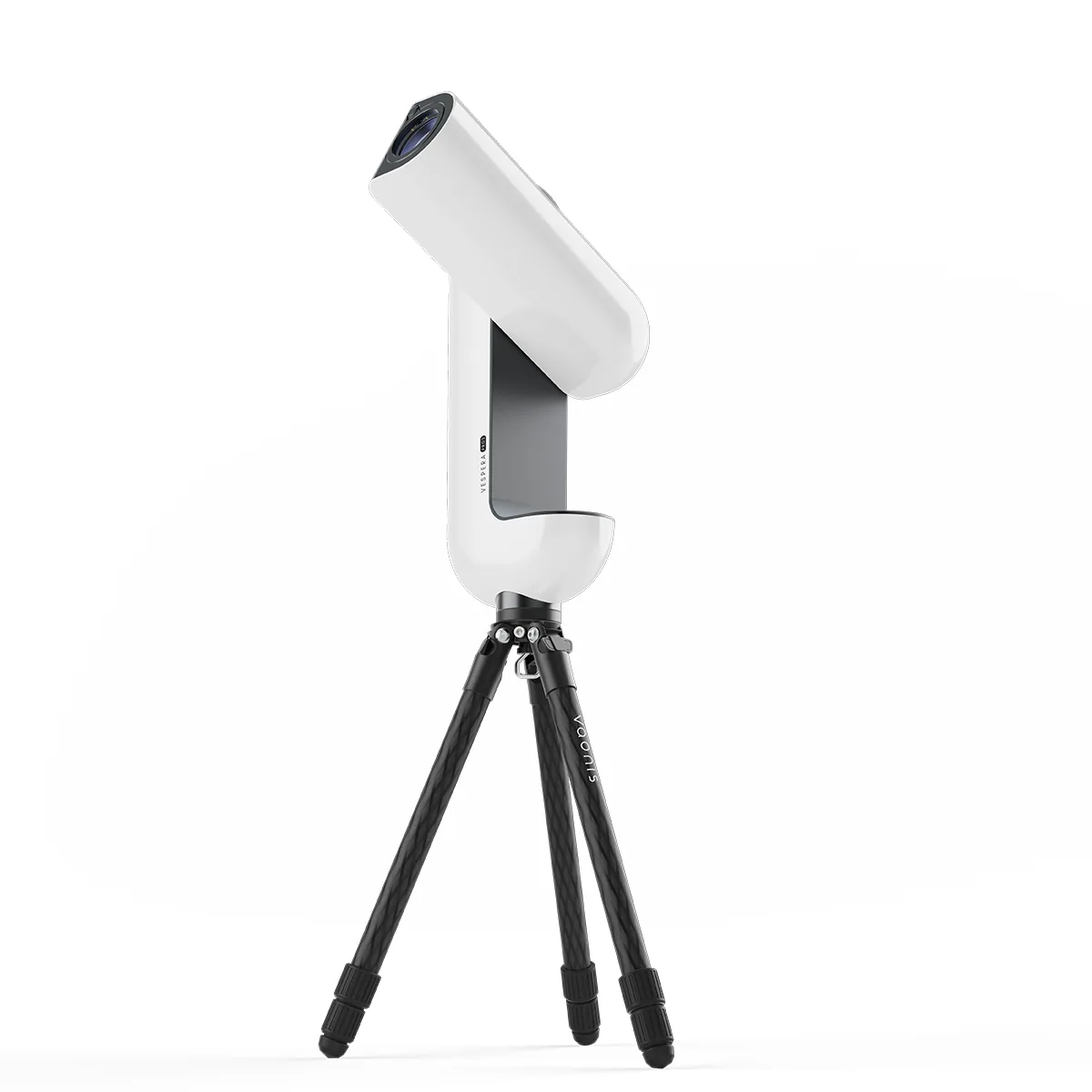
| Vaonis Vespera | Light pollution and dual-band filters sold separately | Add one to the budget if you live in town |
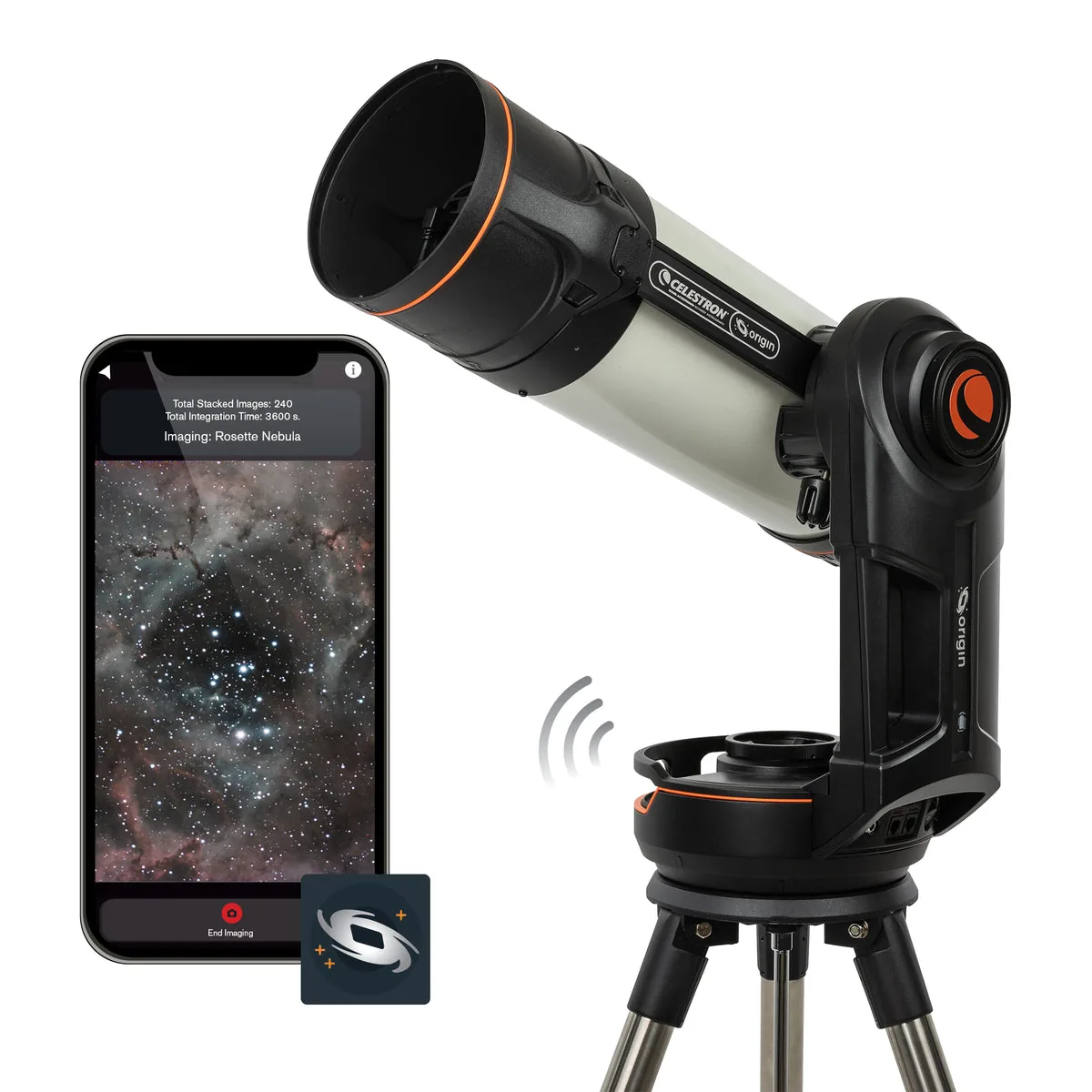
| Celestron Origin Mark II | Filter drawer for 1.25 or 2 inch filters; nebula filter sold separately | Flexible, but an extra purchase |
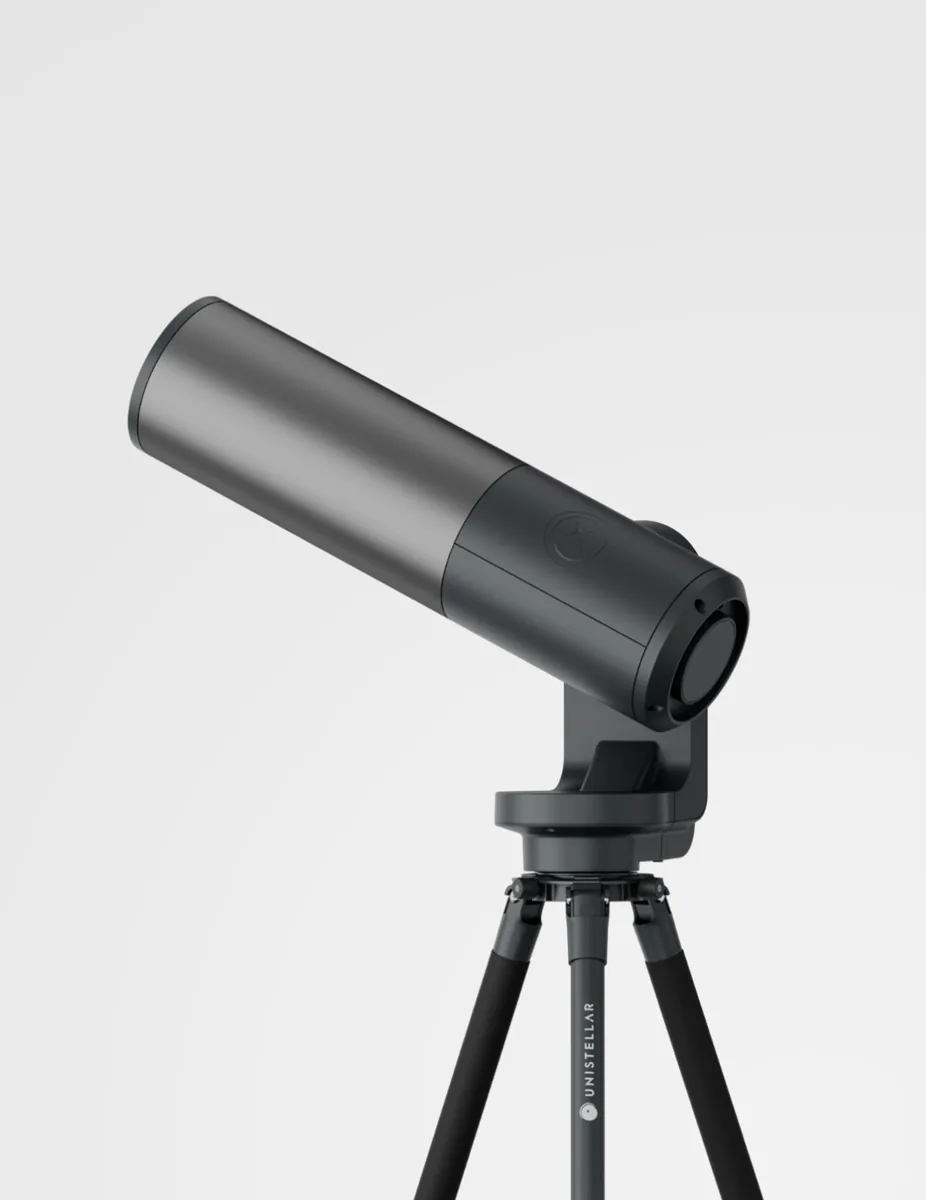
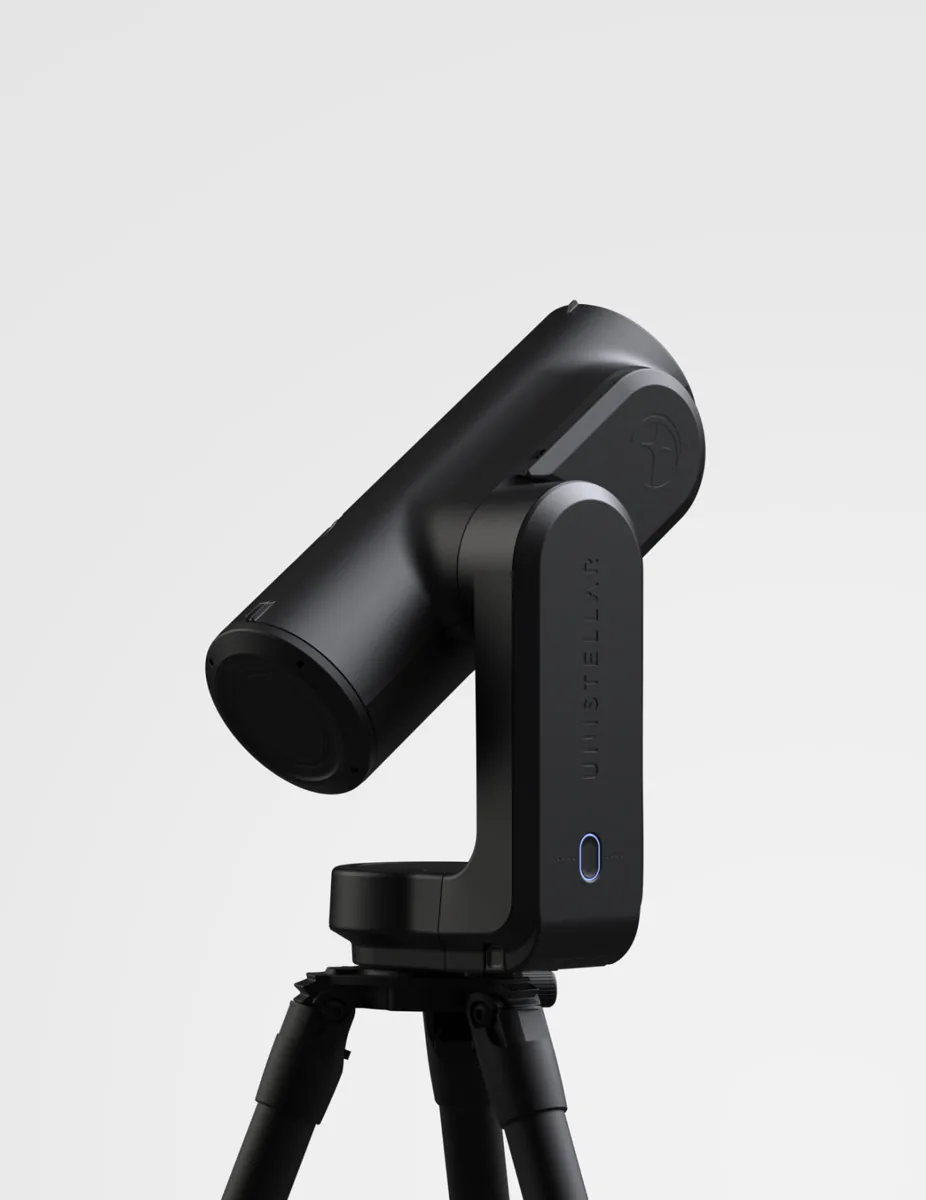
| Unistellar | No light pollution filter listed | Relies on aperture and processing |
A built-in filter has a practical advantage beyond the price: you can switch it on for a nebula and off for a cluster in the same session, without touching the telescope. Our Bortle scale guide explains how to find your own sky class and what each class allows.
Our three picks for bright skies
Seestar S50 Pro, $999, 8.8/10. The best all-round answer for a city or suburban yard. Its 50 mm telephoto has a dual-band filter built in, a 1/1.2-inch 8.3 MP sensor and a 2.8° field, with a 63° wide-angle camera beside it. ZWO states up to 9 hours on its 10,000 mAh battery (lab figure), and Equatorial Mode unlocks 60-second exposures, which helps on faint nebulae. A tripod and a protective case come in the box. It leads our main ranking and our astrophotography ranking.
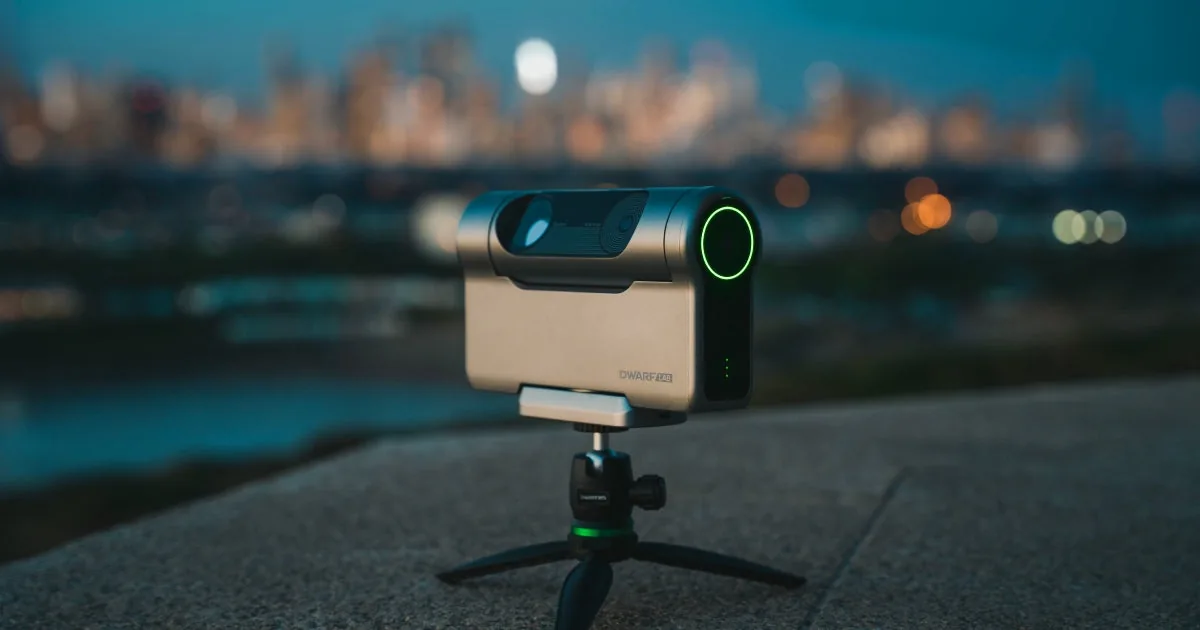
DWARF 3, $549, 8.6/10. The value pick. Its dual-narrowband filter is centered on 500.7 nm and 656.3 nm, the exact lines of oxygen III and hydrogen-alpha, and it sits next to a VIS and an Astro filter. The 8 MP Starvis 2 sensor, 60-second exposures, IP54 protection and a 1.35 kg body make it easy to set up on a balcony or a small yard. DWARFLAB states up to 5.5 hours per charge. Budget $89 for its tripod.
Seestar S30 Pro, $699, 8.5/10. The widest view: 4.6° with the telephoto, enough to frame large nebula complexes in one shot. It has the same built-in duo-band filter as the rest of the Seestar range, an 8.3 MP IMX585 sensor, active anti-dew control and 128 GB of storage, at 1.65 kg. The trade-off is 30 mm of aperture, so expect to stack a little longer.
Torn between the two Seestars? Our Seestar S50 Pro vs S30 Pro head-to-head settles it line by line.
What about the premium models?
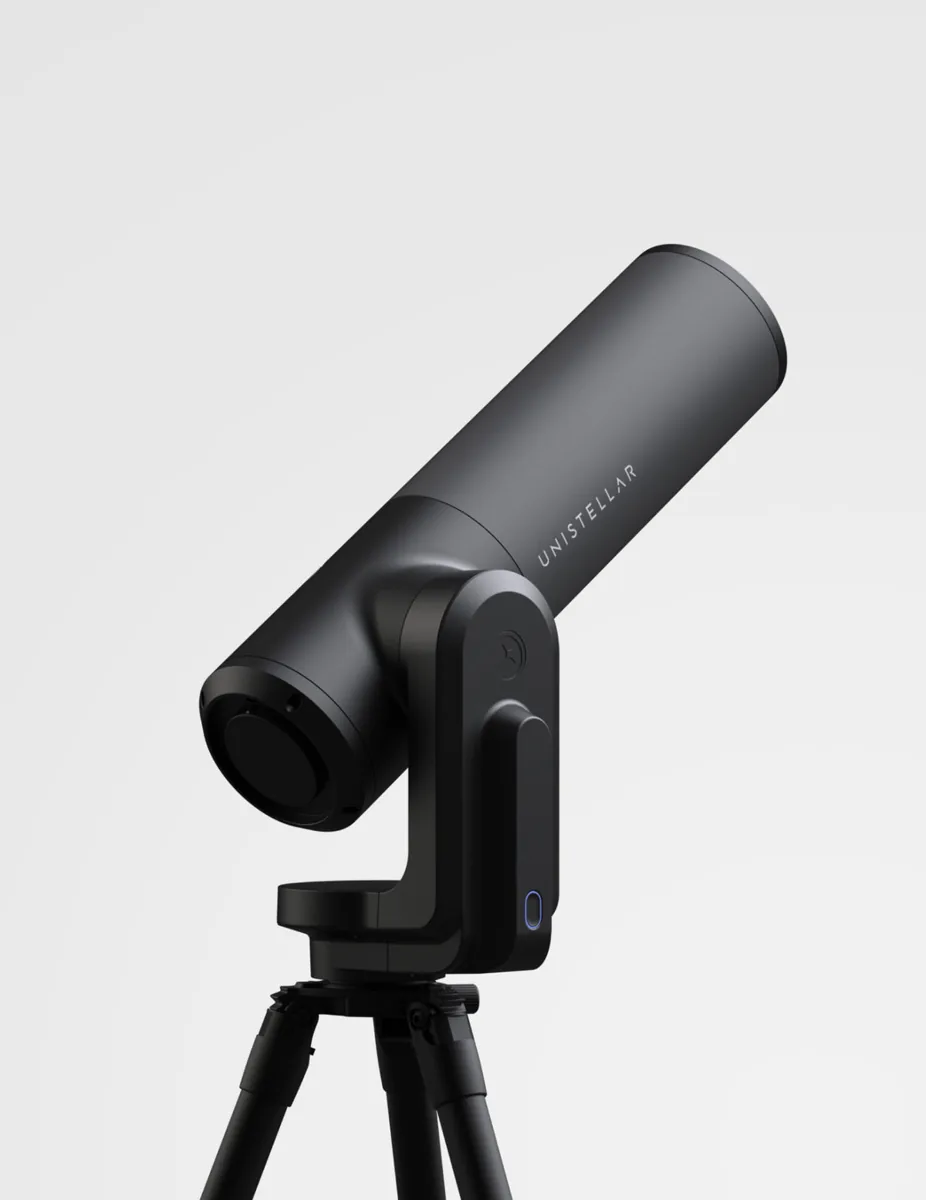
Bigger telescopes still gather more light, and that helps everywhere. The Unistellar eQuinox 2 has a 114 mm mirror and the Celestron Origin Mark II a 152 mm RASA at f/2.2, the fastest focal ratio in our list. Under a bright sky, though, aperture amplifies the glow as well as the nebula, and neither comes with a light pollution filter in the box. If you live in town and plan to buy one of these, budget for the Celestron nebula filter, or plan regular drives to a darker site.
The Vaonis Vespera 3 and Vespera Pro 2 are well-finished telescopes with 11 hours of stated battery and a 5-year warranty, but their dual-band and light pollution filters are sold separately. Add one to the price when you compare them with a Seestar.
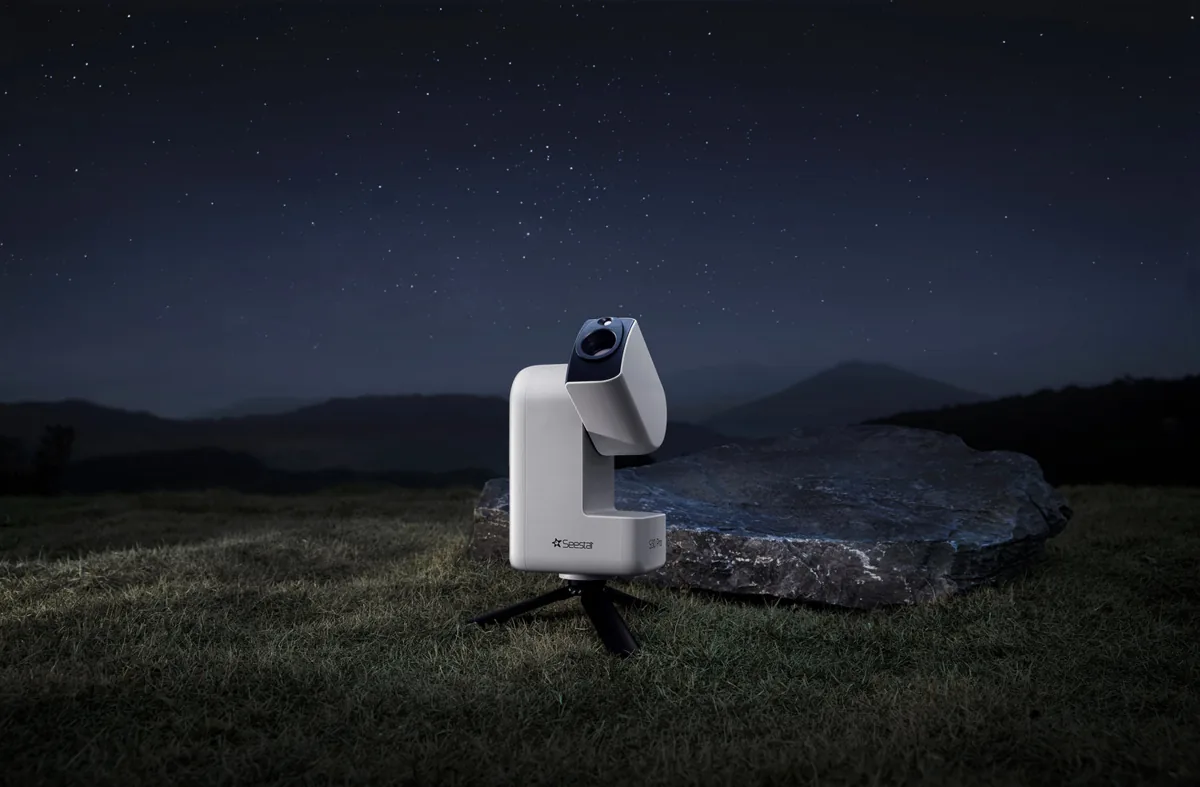
ZWO Seestar S30 Pro8.5/10Read the review
What a city sky still lets you image
- Emission nebulae, filter on: the Orion Nebula in winter, the Rosette and the Heart in winter and early spring, the Lagoon and the Trifid in summer, the North America Nebula in late summer and autumn.
- No filter needed: the Moon, bright star clusters such as the Pleiades and the Double Cluster, and the planets.
- Harder: galaxies and reflection nebulae. Try the bright ones (Andromeda, Bode's Galaxy) on moonless nights, high in the sky, and keep the faint ones for a darker site.
Five habits that beat the glow
- Set up in the shadow of the house or a wall, away from porch lights and streetlights shining straight at the lens.
- Pick targets high in the sky: the glow is strongest near the horizon, where you look through more of the city's light.
- Switch the dual-band filter on for emission nebulae and off for clusters, galaxies and the Moon.
- Avoid the nights around full Moon for faint targets; the Moon brightens the whole sky.
- Export your best stacks and keep notes: after a few weeks you will know which targets are worth a weeknight from home.
Figures from official manufacturer pages and US prices checked on November 9, 2026. Images: manufacturers. How we score: see our methodology.
Our selection
Three rated telescopes mentioned in this guide, at checked prices.
Frequently asked questions
Do smart telescopes work with light pollution?
Yes, especially on emission nebulae with a dual-band filter, which every Seestar and DWARFLAB model has built in. Galaxies and star fields suffer more, and a darker site still makes a visible difference.
What is the best smart telescope for a city?
In our data, the Seestar S50 Pro ($999, 8.8/10): built-in dual-band filter, 50 mm aperture, 9 hours of stated battery and Equatorial Mode. The DWARF 3 ($549) is the value alternative.
Can a telescope see through light pollution?
Not literally, but a filter and live stacking can separate a nebula's light from much of the sky glow. Bright targets and emission nebulae come through well; faint galaxies do not.
Does Unistellar have a light pollution filter?
No light pollution filter is listed for the Unistellar models we compare; Unistellar sells a Smart Solar Filter for the Sun.
Is a dual-band filter worth it on a Vaonis Vespera?
From a suburban or city sky, yes, if nebulae are what you want to image. Vaonis sells light pollution and dual-band filters separately for its Vespera range.