US prices checked on November 9, 2026 · 15 smart telescopes compared, from $399 to $4,999

Ranking by use, updated November 9, 2026

Best smart telescope for planets in 2026

Short answer: the Unistellar eQuinox 2 leads our planet weights (114 mm mirror, 1.33″ per pixel, $2,319 on sale), followed by the Unistellar Odyssey and the Celestron Origin Mark II. The popular small smart telescopes rank lower here for a simple reason: 30 to 50 mm of aperture keeps Jupiter small.

At a glance

Planets are tiny in the sky: Jupiter spans about 30 to 50 arcseconds, Saturn's rings about 40. What decides how many pixels they cover is the image scale (arcseconds per pixel), and what decides how much real detail those pixels hold is the aperture. That is why the Unistellar and Celestron models lead this page, and why the Unistellar Odyssey ($2,079 on sale) is the cheapest way into that group. If planets are a bonus rather than the goal, a $999 Seestar S50 Pro still shows Jupiter's bands and Saturn's rings.

None of these is a planetary telescope in the classic sense. A smart telescope will show you the bands of Jupiter, its moons and Saturn's rings; it will not replace a long-focal-length telescope and a planetary camera. Unistellar itself rates its Odyssey range "excellent" for the Moon and planets and its Expert range "good".

Specs side by side

The 10 telescopes of this ranking, line by line. Tap a column to sort.

Comparison tool
Specs: Best smart telescope for planets in 2026
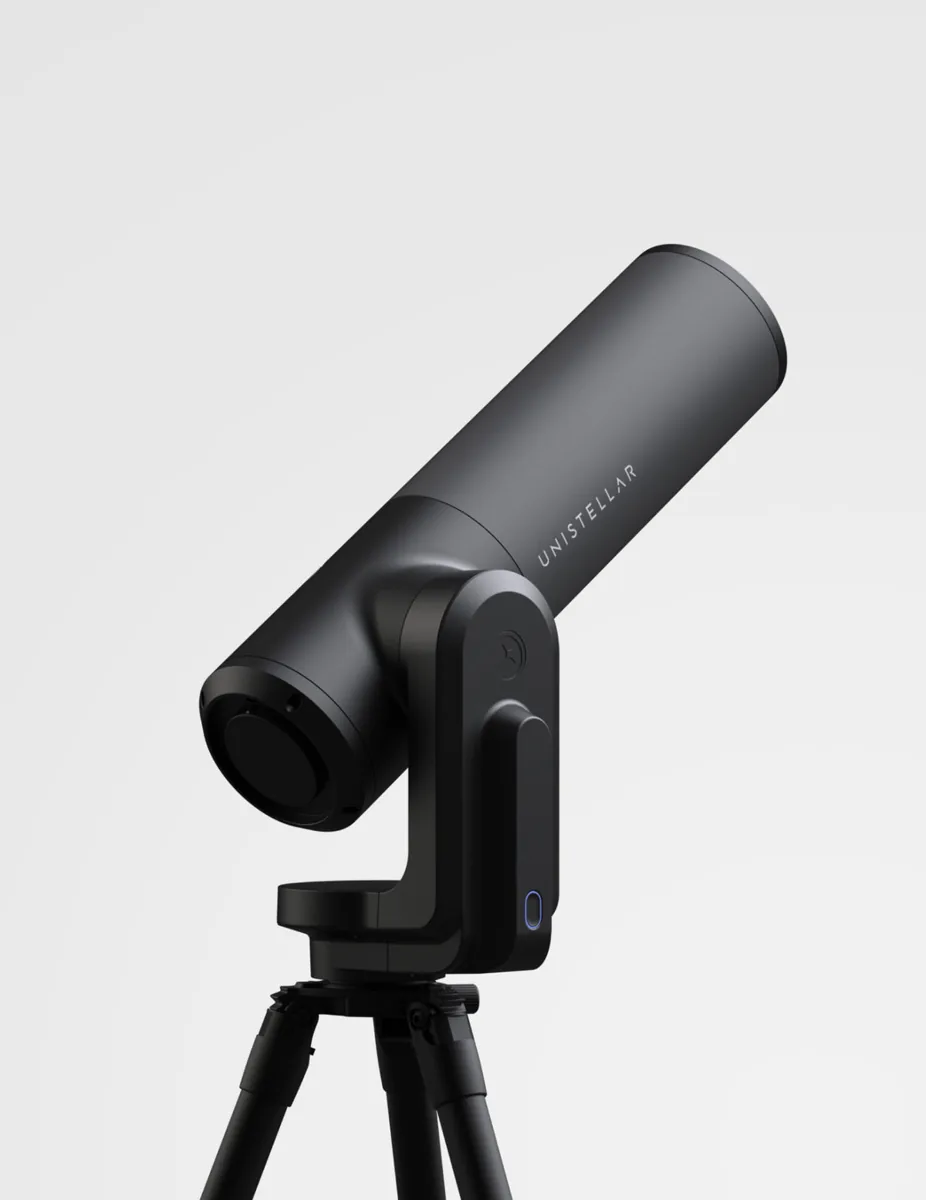
Unistellar eQuinox 2Unistellar eQuinox 28.59.2$2,319114 mm450 mm1.33″/pxNot stated7 kg11 h
Unistellar OdysseyUnistellar Odyssey8.49.1$2,07985 mm320 mm0.93″/pxNot stated4 kg5 h
Celestron Origin Mark IICelestron Origin Mark II8.49.1$4,299152 mm335 mm1.23″/pxSony IMX678 · 8.3 MP12.5 kg6 h
Unistellar eVscope 2Unistellar eVscope 28.39.0$3,999114 mm450 mm1.33″/pxNot stated7 kg9 h
Unistellar Odyssey ProUnistellar Odyssey Pro8.28.9$3,67985 mm320 mm0.93″/pxNot stated4 kg5 h
Vaonis Vespera Pro 2Vaonis Vespera Pro 28.58.5$2,99050 mm245 mm1.6″/pxSony IMX676 · 12.5 MP5 kg11 h
ZWO Seestar S50 ProZWO Seestar S50 Pro8.88.5$99950 mm260 mm2.3″/pxOmniVision OS08B10 · 8.3 MP2.8 kg9 h
ZWO Seestar S50ZWO Seestar S508.68.5$54950 mm250 mm2.42″/pxSony IMX462 · 2.1 MP2.5 kgNot stated
Vaonis Vespera 3Vaonis Vespera 38.48.3$2,49050 mm245 mm2.39″/pxSony IMX585 · 8.3 MP5 kg11 h
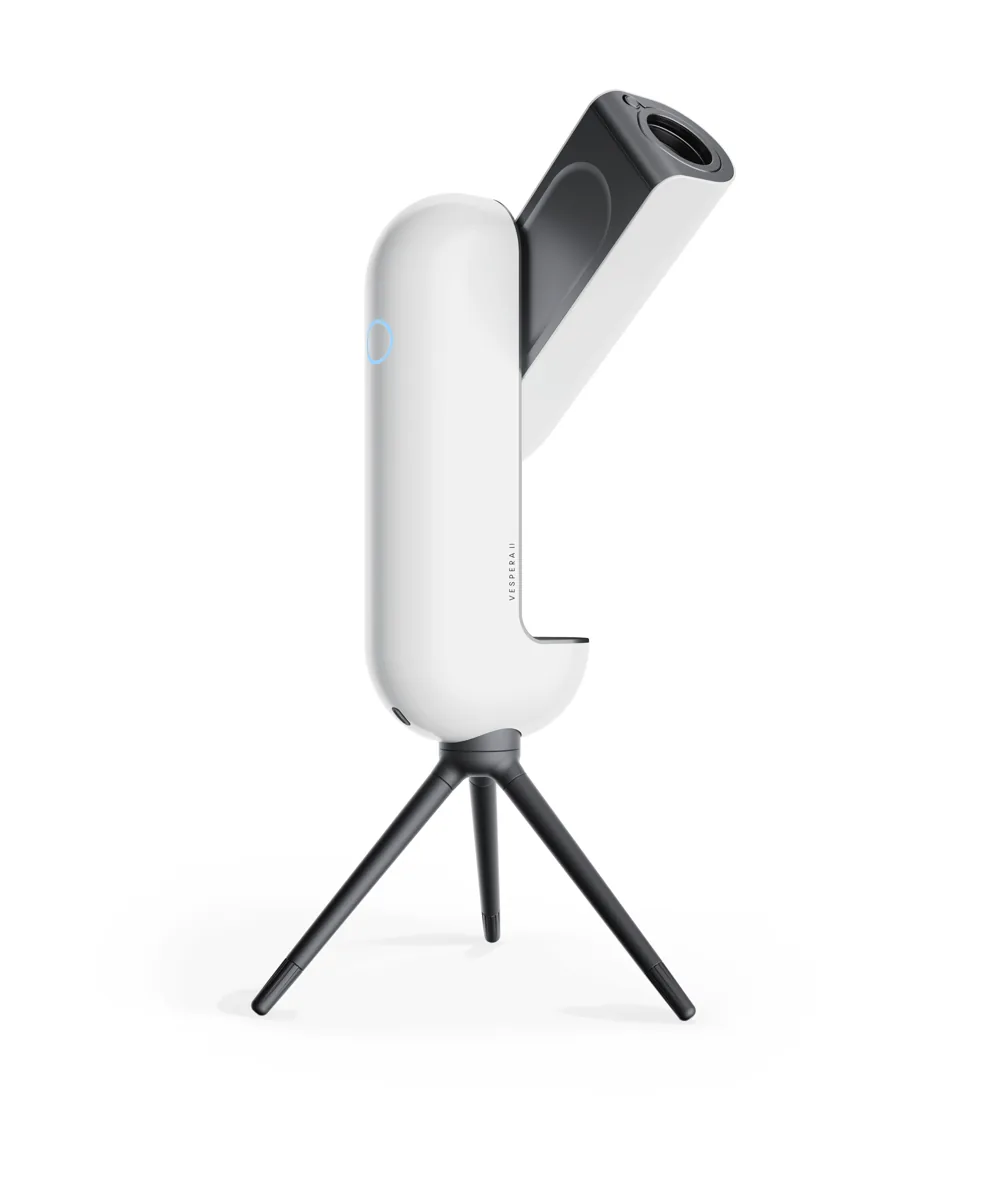
Vaonis Vespera IIVaonis Vespera II8.28.2$1,59050 mm250 mm2.39″/pxSony IMX585 · 8.3 MP5 kg4 h

The ranking in detail

Ordered by our planet score: image scale (detail) 40%, aperture 35%, price 15%, battery life 5%, portability (weight) 5%. The overall score is shown too. Scope: every rated smart telescope, re-weighted for the Moon and planets: image scale and aperture make up three quarters of the score.

Some links are affiliate links: we may earn a commission at no extra cost to you. It never changes our scores. Disclosure

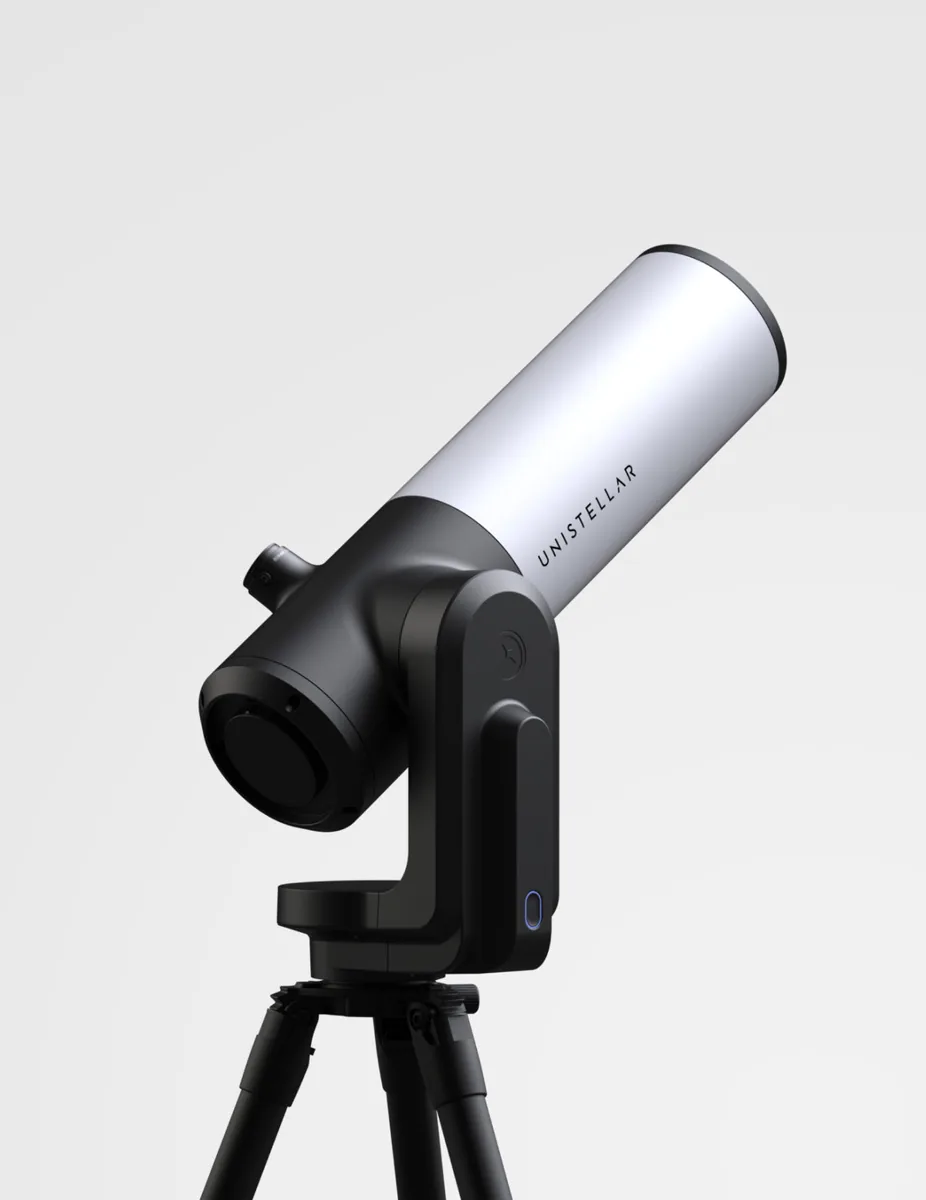
1Unistellar eQuinox 2
Unistellar

Unistellar eQuinox 2

8.5Very good · out of 109.2 planet

A 114 mm mirror and an 11-hour battery, the most aperture among the premium brands. You focus and collimate it yourself.

Aperture
114 mm
Scale
1.33″/px
Weight
7 kg
Battery
11 h
  • 114 mm mirror, limiting magnitude 18.2 stated by Unistellar
  • You observe on a phone or tablet; up to 10 people can follow the same view, per Unistellar
  • 11 hours of battery, 7 kg telescope, premium tripod included
$2,319$2,899Price checked on November 9, 2026 · Black Friday sale price on the Unistellar US store ("limited time", no end date stated)
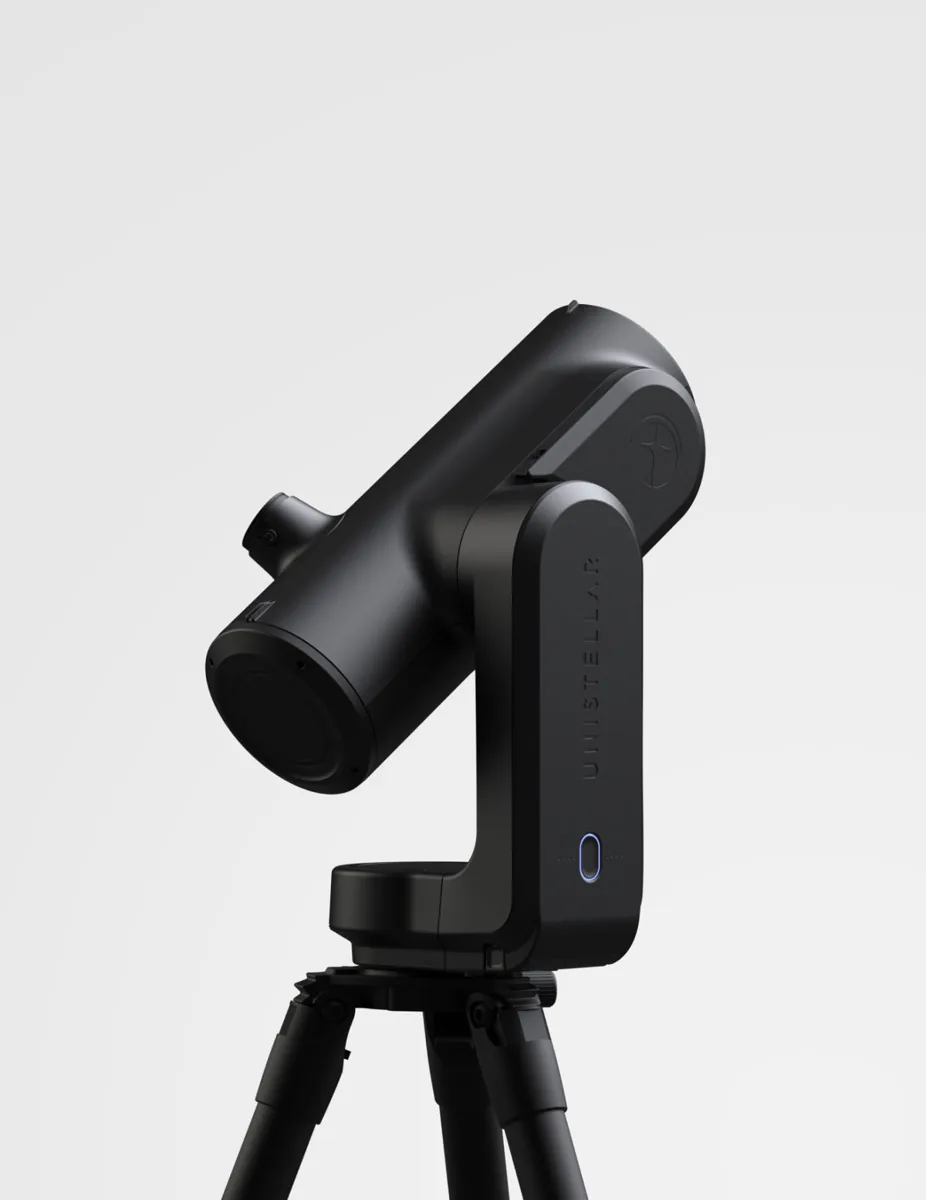
2Unistellar Odyssey
Unistellar

Unistellar Odyssey

8.4Good · out of 109.1 planet

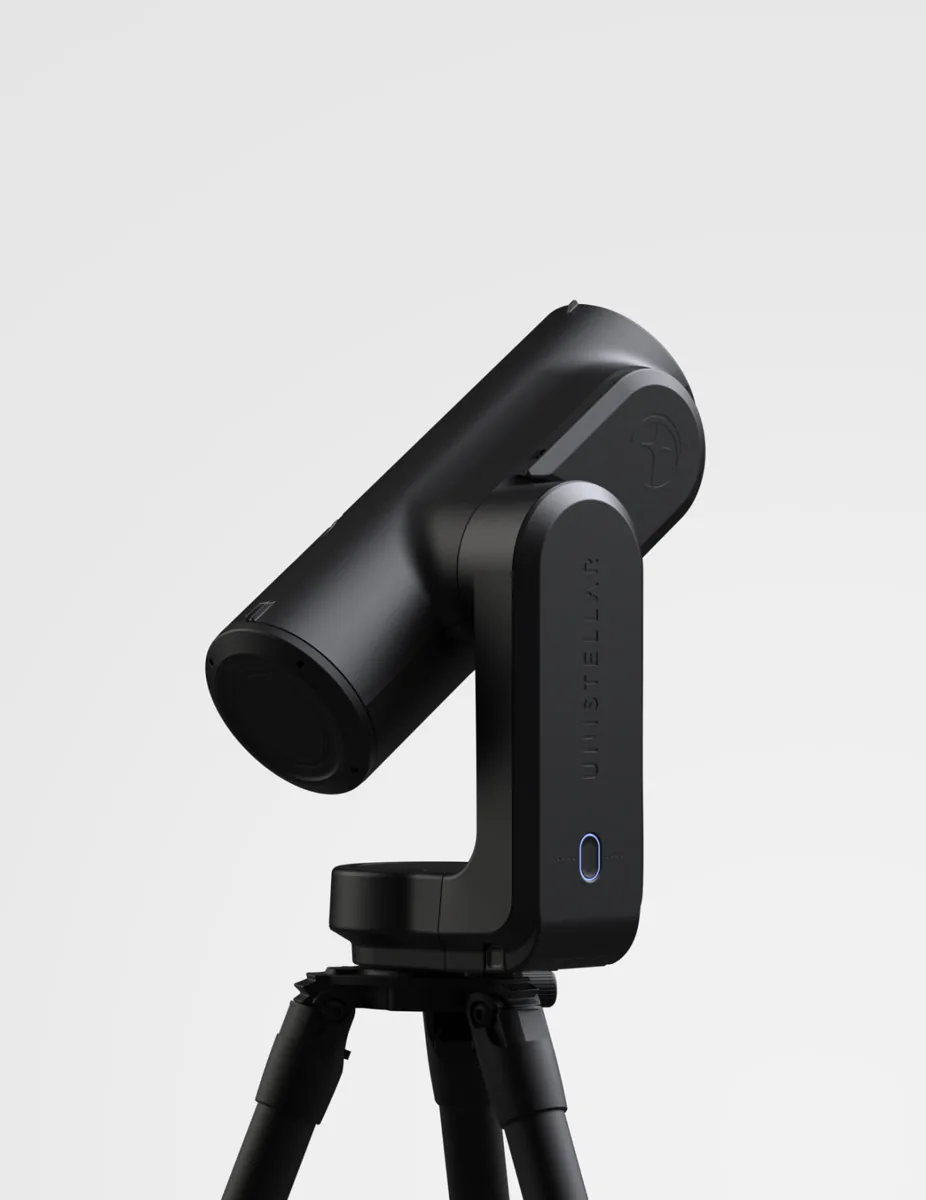
85 mm Nikon-optics reflector with autofocus, a 0.93″ image scale for the Moon and planets, and a live view up to 10 people can share.

Aperture
85 mm
Scale
0.93″/px
Weight
4 kg
Battery
5 h
  • 85 mm Nikon-optics reflector with Stellar Autofocus: no focusing or collimation, according to Unistellar
  • You observe on a phone or tablet; up to 10 people can follow the same view, per Unistellar
  • 5 hours of battery, 4 kg telescope, premium tripod included
$2,079$2,599Price checked on November 9, 2026 · Black Friday sale price on the Unistellar US store ("limited time", no end date stated)
3Celestron Origin Mark II
CelestronOut of stock at the official US store

Celestron Origin Mark II

8.4Good · out of 109.1 planet

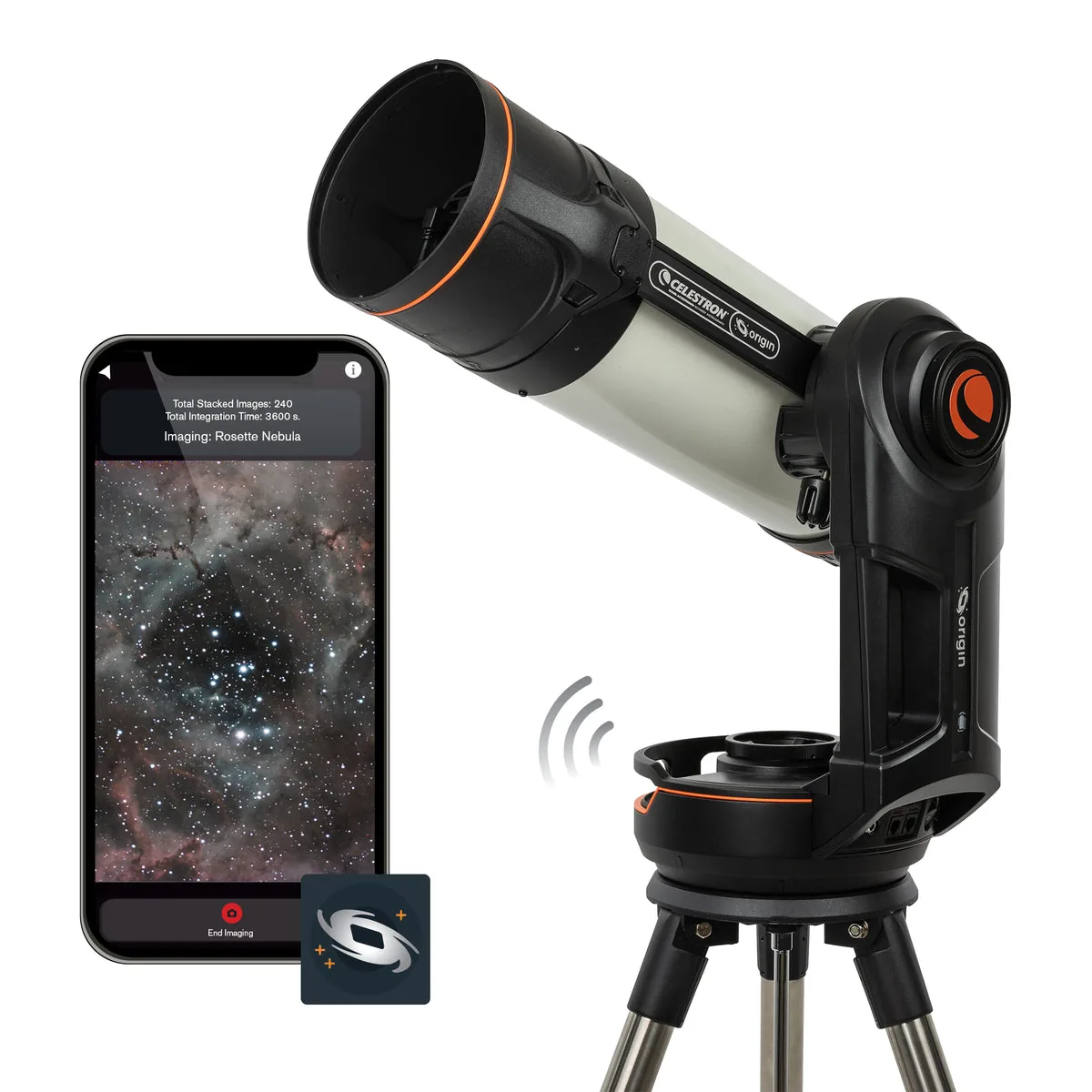
The biggest and fastest optics we compare: a 6-inch RASA at f/2.2. Also 18.87 kg with its tripod, and $4,299.

Aperture
152 mm
Sensor
8.3 MP
Scale
1.23″/px
Weight
12.5 kg
Battery
6 h
  • 152 mm RASA optics at f/2.2, the largest aperture and fastest focal ratio in our list
  • Sony IMX678 Starvis 2 camera, automatic dew heater and filter drawer
  • StarSense alignment and autofocus; raw files available over USB
$4,299Price checked on November 9, 2026
4Unistellar eVscope 2
Unistellar

Unistellar eVscope 2

8.3Good · out of 109.0 planet

The eQuinox 2 optics with a Nikon OLED eyepiece. The most expensive telescope in our list, and still manual focus.

Aperture
114 mm
Scale
1.33″/px
Weight
7 kg
Battery
9 h
  • 114 mm mirror, limiting magnitude 18.2 stated by Unistellar
  • Nikon Eyepiece Technology: an OLED eyepiece on the telescope, in addition to the phone view
  • 9 hours of battery, 7 kg telescope, premium tripod included
$3,999$4,999Price checked on November 9, 2026 · Black Friday sale price on the Unistellar US store ("limited time", no end date stated)
5Unistellar Odyssey Pro
Unistellar

Unistellar Odyssey Pro

8.2Good · out of 108.9 planet

The Odyssey with an electronic Nikon eyepiece. Same optics, $1,600 more at list price.

Aperture
85 mm
Scale
0.93″/px
Weight
4 kg
Battery
5 h
  • 85 mm Nikon-optics reflector with Stellar Autofocus: no focusing or collimation, according to Unistellar
  • Nikon Eyepiece Technology: an OLED eyepiece on the telescope, in addition to the phone view
  • 5 hours of battery, 4 kg telescope, premium tripod included
$3,679$4,599Price checked on November 9, 2026 · Black Friday sale price on the Unistellar US store ("limited time", no end date stated)
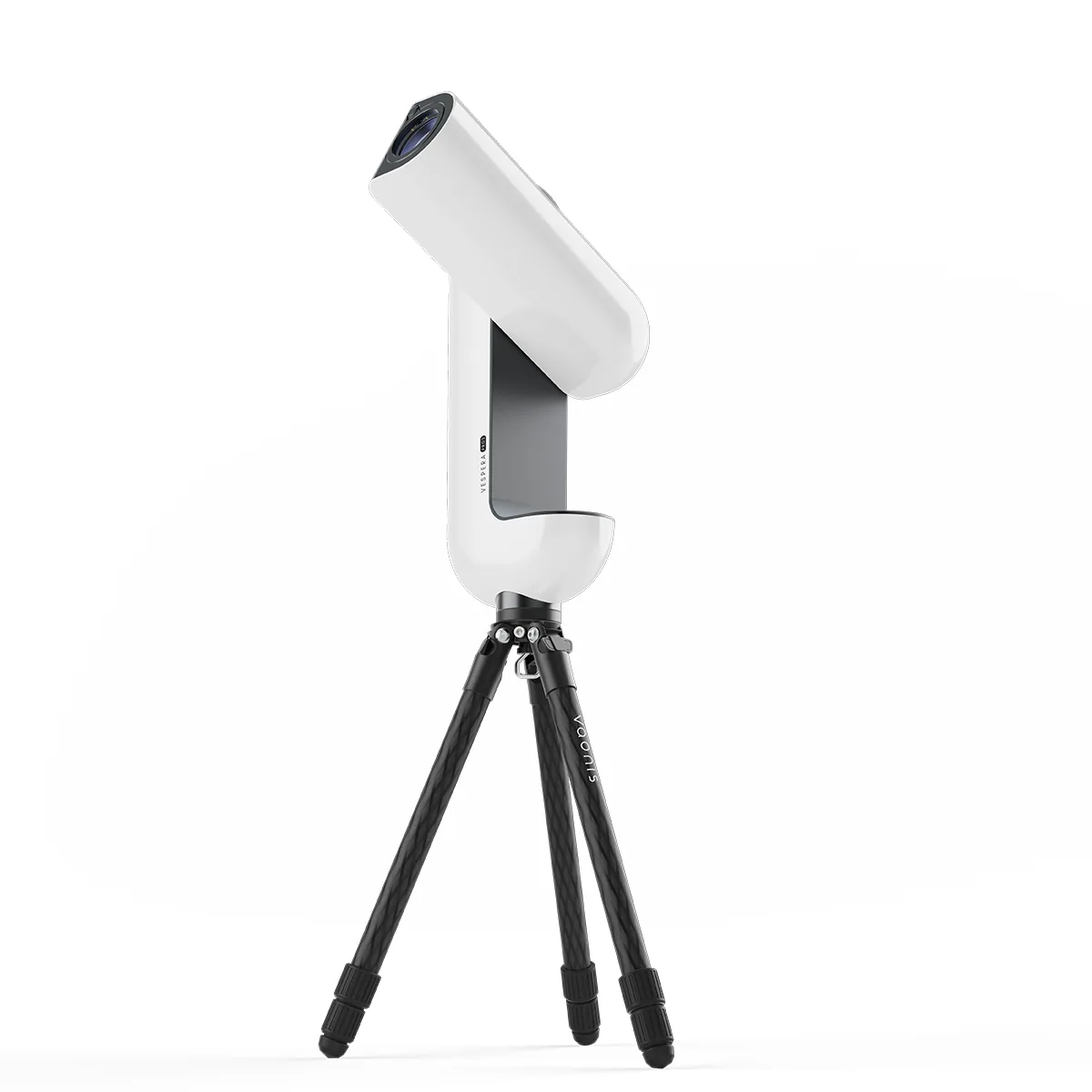
6Vaonis Vespera Pro 2
Vaonis

Vaonis Vespera Pro 2

8.5Very good · out of 108.5 planet

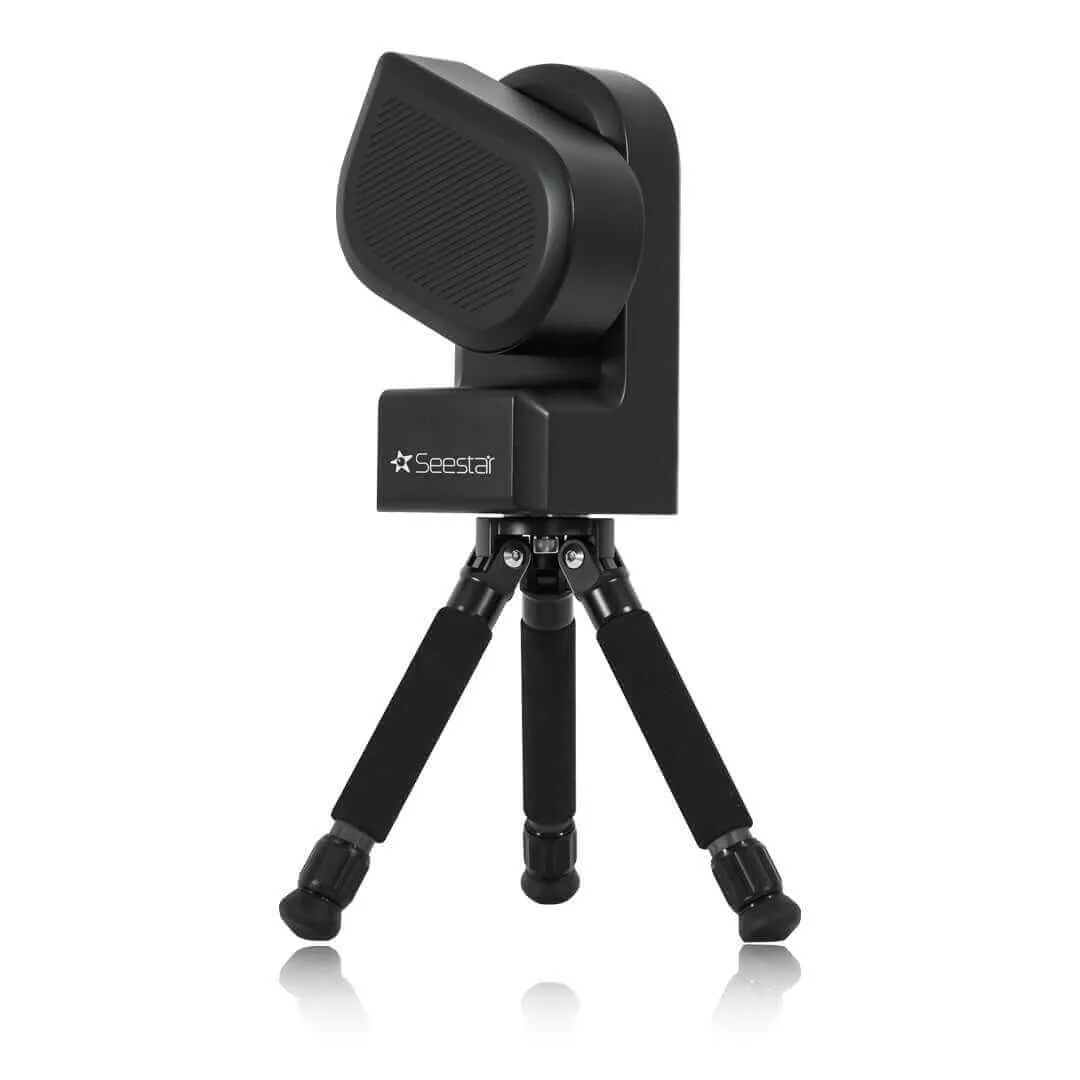
The finest native resolution here (12.5 MP square sensor, 1.60″ per pixel), manual controls and a 5-year warranty. Still 50 mm.

Aperture
50 mm
Sensor
12.5 MP
Scale
1.6″/px
Weight
5 kg
Battery
11 h
  • 12.5 MP square Sony IMX676 sensor and mosaics of up to 50 MP, according to Vaonis
  • Manual exposure, gain and calibration frames, with 16-bit RAW export
  • 256 GB of storage (225 GB usable), carbon tripod and fly case in the box
$2,990Price checked on November 9, 2026
7ZWO Seestar S50 Pro
ZWO Seestar

ZWO Seestar S50 Pro

8.8Very good · out of 108.5 planet

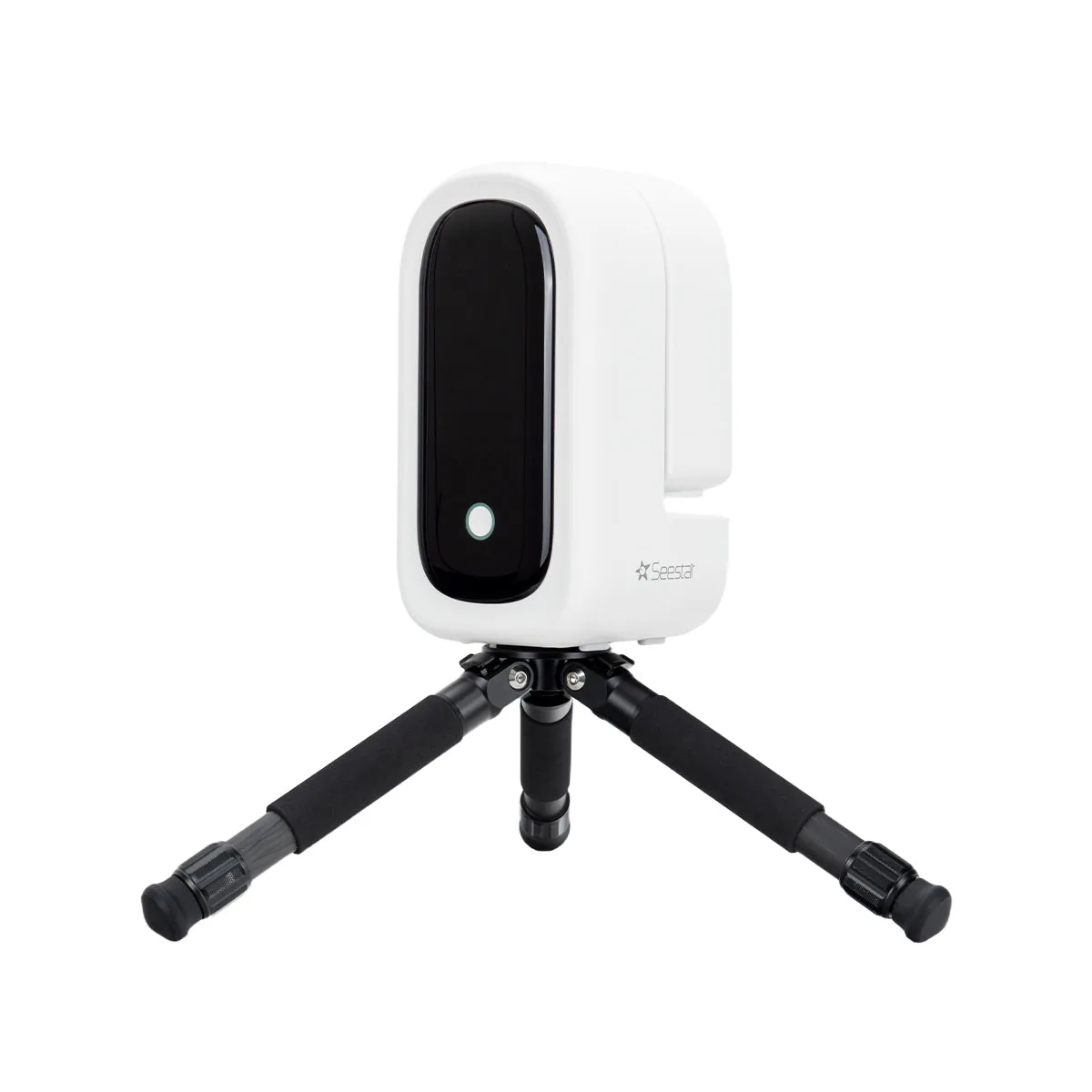
Two 4K cameras, a 50 mm lens, a built-in dual-band filter and a stated 9-hour battery for $999. The fewest weak spots for the money.

Aperture
50 mm
Sensor
8.3 MP
Scale
2.3″/px
Weight
2.8 kg
Battery
9 h
  • Two 4K cameras: a 50 mm telephoto with a 1/1.2-inch sensor and a 63° wide-angle camera
  • Up to 9 hours on its 10,000 mAh battery, by ZWO laboratory figures
  • Equatorial Mode with 60-second exposures, plus ASCOM Alpaca support for N.I.N.A.
$999Price checked on November 9, 2026
8ZWO Seestar S50
ZWO SeestarSold out at the official US store

ZWO Seestar S50

8.6Very good · out of 108.5 planet

Still the aperture-per-dollar pick at $549 with a built-in filter and Equatorial Mode, if you can find one: sold out at ZWO US when we checked.

Aperture
50 mm
Sensor
2.1 MP
Scale
2.42″/px
Weight
2.5 kg
  • 50 mm apochromatic triplet with ED glass and a 250 mm focal length, according to ZWO
  • Duo-band light pollution filter built in, switched from the app
  • Alt-azimuth mount that also supports Equatorial Mode
$549Price checked on November 9, 2026
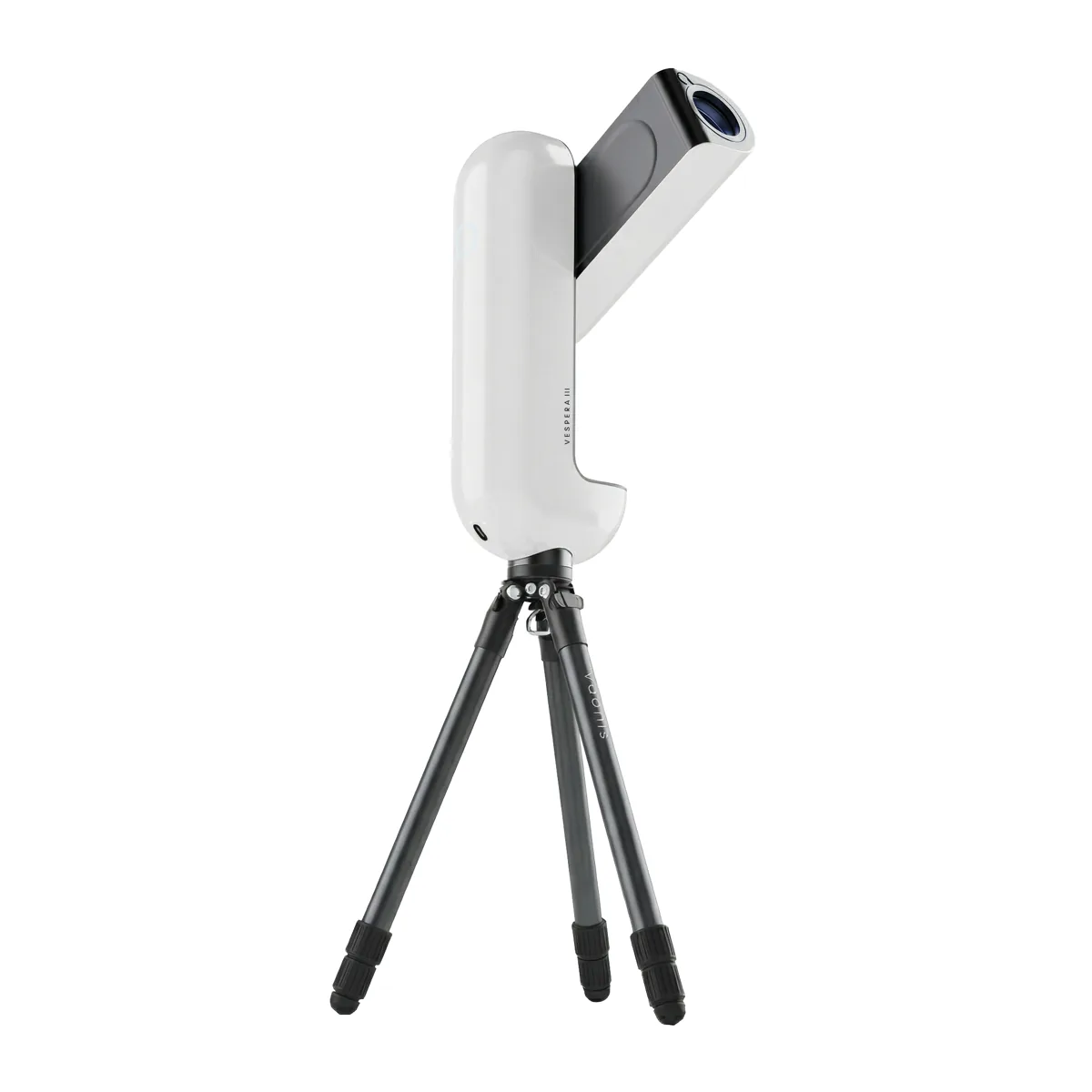
9Vaonis Vespera 3
Vaonis

Vaonis Vespera 3

8.4Good · out of 108.3 planet

11 hours of battery, a dew heater with humidity sensor, a tripod in the box and a 5-year warranty. You pay for comfort, not aperture.

Aperture
50 mm
Sensor
8.3 MP
Scale
2.39″/px
Weight
5 kg
Battery
11 h
  • 11 hours of battery life and 128 GB of storage (115 GB usable), according to Vaonis
  • New Petzval-inspired quadruplet with optical baffles against stray light
  • Dew heater with a humidity and temperature sensor, aluminium tripod included
$2,490Price checked on November 9, 2026
10Vaonis Vespera II
Vaonis

Vaonis Vespera II

8.2Good · out of 108.2 planet

Lovely design, 8.3 MP sensor and a 3-year warranty, but a 4-hour battery and optional filter for $1,590 on early-bird pricing.

Aperture
50 mm
Sensor
8.3 MP
Scale
2.39″/px
Weight
5 kg
Battery
4 h
  • Sony IMX585 sensor behind a 50 mm apochromatic quadruplet, 8.3 MP native and 24 MP with the CovalENS mosaic mode
  • One touch button and automatic initialization from the Singularity app
  • Vaonis lists a 3-year warranty and IP43 weather protection
$1,590$1,690Price checked on November 9, 2026 · Early-bird price listed by Vaonis until November 15, 2026

Images: manufacturers

How to choose

Look for an image scale under 1.5″ per pixel

Only the Unistellar models (0.93″ and 1.33″), the Celestron Origin (1.23″) and the Draco (1.45″) are there.

Aperture sets the detail limit

A 114 mm mirror resolves 1.23″ according to Unistellar, enough for Jupiter's Great Red Spot; an 85 mm one resolves 1.68″.

Planets move: timing matters more than specs

Pick nights when the planet is high in the sky. Our guide what can you see with a smart telescope gives realistic expectations.

Moon and Sun count too

Every model here images the Moon well. For the Sun, use only the maker's solar filter: Seestar and DWARFLAB include one, Unistellar and Vaonis sell it separately.

How we build this ranking

Every telescope gets the same nine criteria, each scored out of 10 from the official spec sheet and the US price checked on November 9, 2026. A missing figure removes the criterion and the other weights are rescaled; we never guess a value. This page re-weights the same values for its use (image scale (detail) 40%, aperture 35%, price 15%, battery life 5%, portability (weight) 5%).

No brand pays for a place in this ranking, and a commission never moves a score: the formula only sees specs and prices.

  • Aperture: 35% here (25% overall)
  • Sensor resolution: 0% here (10% overall)
  • Image scale (detail): 40% here (10% overall)
  • Light pollution filter: 0% here (10% overall)
  • Battery life: 5% here (10% overall)
  • Portability (weight): 5% here (10% overall)
  • Tracking mode: 0% here (5% overall)
  • Warranty: 0% here (5% overall)
  • Price: 15% here (15% overall)

Frequently asked questions

What is the best smart telescope for planets?

With our planet weights, the Unistellar eQuinox 2 ranks first (9.2/10), then the Unistellar Odyssey (9.1) and the Celestron Origin Mark II (9.1). They have the finest image scales and 85 to 152 mm of aperture.

Can the Seestar S50 see planets?

Yes, as small discs with Jupiter's bands and Saturn's rings visible. It ranks lower here because 50 mm and about 2.4″ per pixel limit detail.

Why do smart telescopes struggle with planets?

Most use short focal lengths (150 to 260 mm) to frame large nebulae and galaxies. Planets need long focal lengths and large apertures, which is the opposite design.

Is a smart telescope good for viewing the Moon?

Yes, every model in our list handles the Moon, and the wider-field ones fit it whole. Detail on craters improves with aperture.