Aperture: the spec that matters most
Aperture is the diameter of the lens or mirror. Light gathered grows with the square of the diameter, so a 50 mm telescope collects about 2.8 times more light than a 30 mm one, and a 114 mm mirror about 5 times more than a 50 mm lens. More light means faint targets appear sooner and cleaner, and the theoretical resolving power improves.
| Aperture | Models | Light vs 30 mm |
|---|---|---|
| 30 mm | Seestar S30, S30 Pro, DWARF mini | 1× |
| 35 mm | DWARF 3 | 1.4× |
| 50 mm | Seestar S50, S50 Pro, Vespera II, 3, Pro 2 | 2.8× |
| 85 mm | Unistellar Odyssey, Odyssey Pro | 8× |
| 90 mm | DWARFLAB Draco | 9× |
| 114 mm | Unistellar eQuinox 2, eVscope 2 | 14× |
| 152 mm | Celestron Origin Mark II | 26× |
Focal length, field of view and image scale
Focal length sets the magnification and the field. Short focal lengths (150 to 260 mm on most smart telescopes) give wide fields for large nebulae; longer ones (320 to 450 mm on Unistellar) give narrow fields for small targets. The image scale joins focal length and pixel size into one number: arcseconds of sky per pixel.
We compute it with the standard formula, 206.265 × pixel size in micrometers ÷ focal length in millimeters, when the maker states both, or from the stated field of view and pixel count; Vaonis, Unistellar and Celestron state it directly. Below about 1.5″ per pixel, planets and small galaxies start to show structure; around 4″, they are dots.
| Telescope | Focal length | Image scale | Native field |
|---|---|---|---|
| Unistellar Odyssey | 320 mm | 0.93″ (stated) | 0.56° × 0.75° |
| Celestron Origin Mark II | 335 mm | 1.23″ (stated) | 1.32° × 0.75° |
| Unistellar eQuinox 2 | 450 mm | 1.33″ (stated) | 0.57° × 0.76° |
| Vaonis Vespera Pro 2 | 245 mm | 1.60″ (stated) | 1.6° × 1.6° |
| Seestar S50 Pro | 260 mm | 2.30″ (computed) | 2.8° |
| DWARF 3 | 150 mm | 2.75″ (computed) | 3.38° diagonal |
| Seestar S30 Pro | 160 mm | 3.76″ (computed) | 4.6° diagonal |
TipSee how targets fit in each telescope with our field of view tool.
Sensor and megapixels
Most smart telescopes use Sony Starvis sensors: IMX462 and IMX662 (about 2 MP) on older or entry models, IMX585 and IMX678 (8 to 8.3 MP) on newer ones, IMX676 (12.5 MP) on the Vespera Pro 2. More megapixels give a larger, more croppable image, and a larger sensor covers a wider field at the same focal length. They do not make a small telescope see fainter objects: that is aperture.
Two extras are worth noting. A second wide-angle camera (Seestar S30, S30 Pro, S50 Pro, DWARF 3, DWARF mini, Draco) helps framing and adds Milky Way and landscape shots. Equatorial mode or field derotation (Seestar, DWARFLAB) allows longer single exposures: 60 s on the S50 Pro and DWARF 3, 90 s on the DWARF mini, 300 s on the Draco, according to their makers.
Filter, battery, weight and warranty
- Filter: built in on Seestar and DWARFLAB, optional on Vaonis and Celestron, none on Unistellar. It matters from the suburbs.
- Battery: from 4 hours (Vespera II, DWARF mini) to 11 hours (Vespera 3, Vespera Pro 2, eQuinox 2), as stated by the makers. ZWO states mAh, not hours, except for the S50 Pro (9 h).
- Weight: 0.84 kg (DWARF mini) to 12.5 kg for the Celestron Origin tube and mount (18.87 kg with the tripod).
- Warranty: 2 years for most, 3 years for the Vespera II, 5 years for the Vespera 3 and Pro 2.
Five questions to answer before you order
- Where will you observe most nights? A city balcony calls for a built-in dual-band filter; a dark rural yard rewards aperture.
- What do you want to see first? Large nebulae and Andromeda favor a wide field; planets and small galaxies favor a fine image scale.
- How far will you carry it? Under 3 kg goes out on a whim; 5 kg and more goes out when you plan it.
- How long are your sessions? For a full night without a power bank, look for 9 to 11 hours of stated battery life.
- What is your real budget? Add the extras: a tripod for DWARFLAB, a head for Seestar Equatorial Mode, filters for Vaonis and Celestron.
If two telescopes are close on those five questions, the comparison tool puts them side by side, and the warranty and return policy usually settle it.
Match the specs to your use
| If you mostly want | Look for | Our ranking |
|---|---|---|
| An easy first telescope | Autofocus, no collimation, built-in filter, under $1,000 | Beginners |
| Nebula and galaxy photos | Aperture, image scale, sensor, equatorial mode | Astrophotography |
| The Moon and planets | Image scale under 1.5″, large aperture | Planets |
| Travel and hiking | Under 3 kg, long battery | Portable |
| The best value | Overall score at a set budget | Under $1,000 |
Telescopes mentioned in this guide
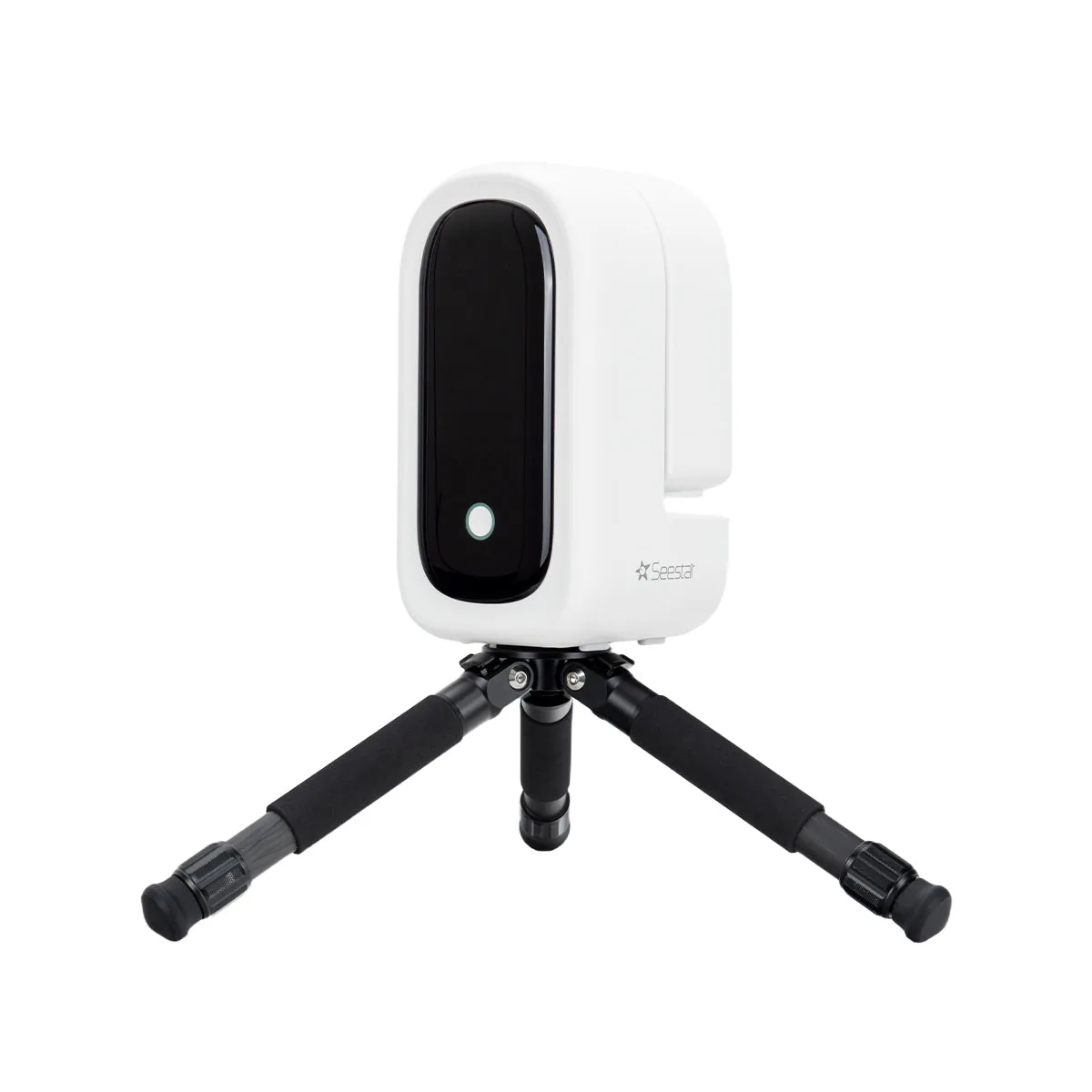
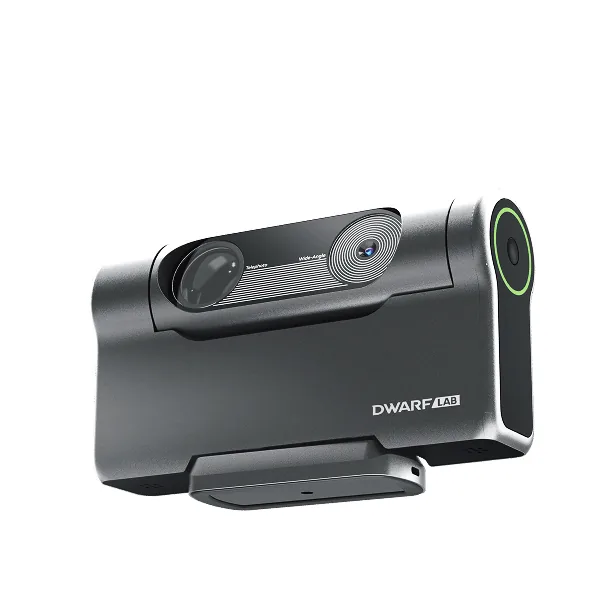
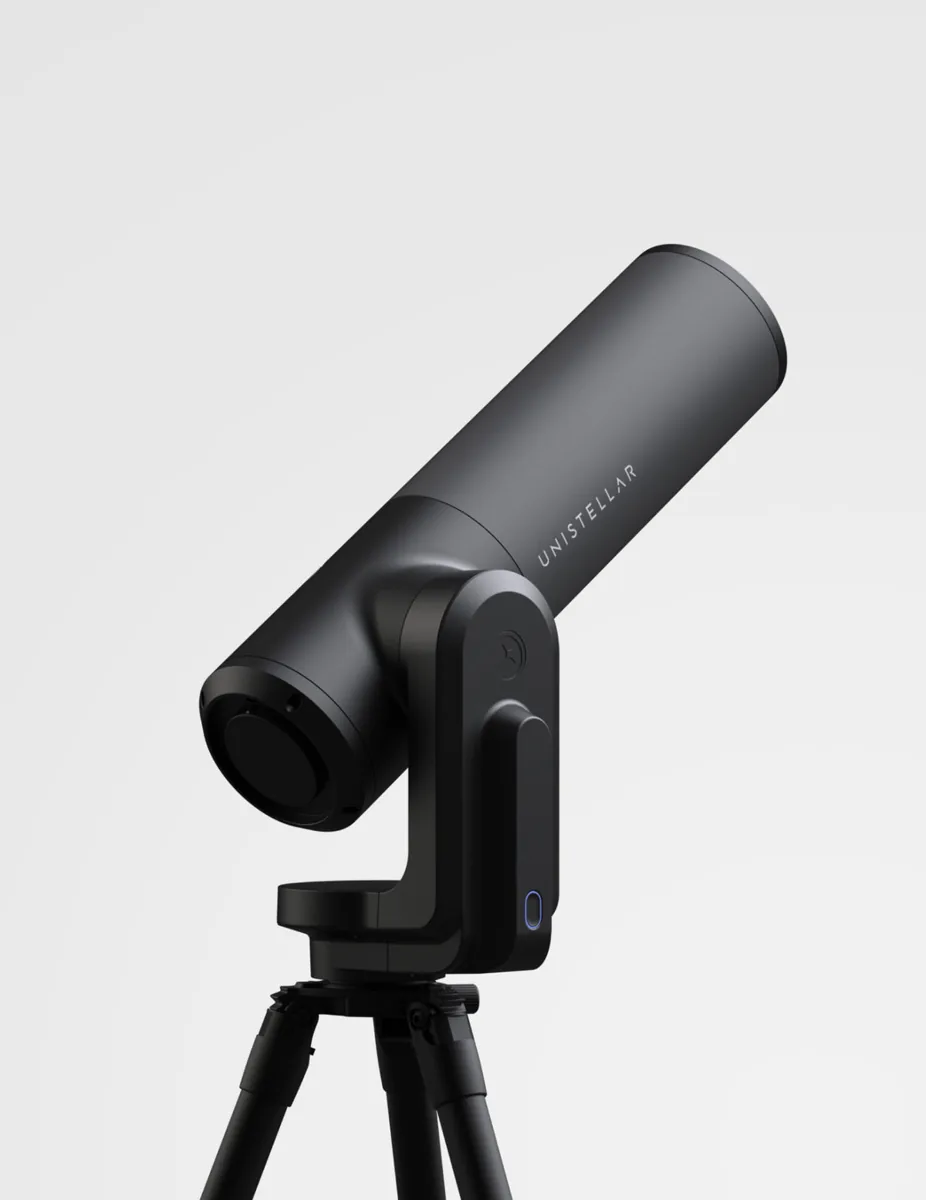
Frequently asked questions
What aperture should a smart telescope have?
50 mm is the sweet spot of price and performance in 2026 (Seestar S50 and S50 Pro, Vaonis Vespera). 30 to 35 mm models are lighter and cheaper; 85 mm and up costs $2,000 or more.
Are more megapixels better on a smart telescope?
They give larger images to crop and print, but they do not gather more light. Aperture and image scale matter more for detail.
What is image scale?
The amount of sky one pixel covers, in arcseconds. It equals 206.265 × pixel size (µm) ÷ focal length (mm). Smaller numbers mean finer detail.
What is the best field of view for a smart telescope?
It depends on targets: 2.5° to 4.6° frames large nebulae and Andromeda; under 1.5° suits planets and small galaxies.