How a smart telescope works
Every smart telescope follows the same loop. A sensor sits where your eye would be, behind a short refractor (ZWO, DWARFLAB, Vaonis) or a mirror (Unistellar, Celestron). The motorized mount points the tube, the camera takes a frame, and software compares the stars in that frame with a catalog to know exactly where it is looking. From then on, it can go to any target you pick in the app and follow it as the sky turns.
Once on target, it shoots exposures of a few seconds and adds them together, frame after frame. Noise averages out and faint light accumulates, which is why the Orion Nebula looks gray and flat after ten seconds and red, pink and blue after ten minutes. Vaonis calls it "live image enhancement"; Unistellar calls its version Dynamic Signal Amplification; ZWO and DWARFLAB do the same with live stacking.
- Set the telescope on its tripod, roughly level, with a view of the sky.
- Turn it on and connect your phone to its Wi-Fi or Bluetooth from the maker's app.
- Let it calibrate: it photographs the sky, solves its position and focuses (manual focus only on the Unistellar eQuinox 2 and eVscope 2).
- Pick a target from the app catalog, or one the app suggests for tonight.
- Watch the image build up, then save it or export the raw files.
What it can and cannot do
Smart telescopes are at their best on deep-sky objects: emission nebulae (Orion, Lagoon, Heart, Rosette), large galaxies (Andromeda, Triangulum, Bode's), star clusters and comets. They handle the Moon very well, and the Sun with the maker's solar filter. Several models double as long telephoto cameras for birds and landscapes in the daytime.
They are weaker on planets. Most have focal lengths between 150 and 340 mm, which is short for a telescope: perfect to frame a nebula one degree wide, too short to make Jupiter more than a small disc. The exceptions in our data are the Unistellar models (0.93 to 1.33 arcseconds per pixel) and the Celestron Origin Mark II (1.23″). Our planet ranking weighs exactly that.
SafetyNever point a smart telescope at the Sun without the solar filter made for it. Every maker in our list warns that the Sun can damage the sensor, and solar observing should always be supervised by an adult.
What a smart telescope costs in 2026
Prices fall into three tiers. The table below uses the US prices we read on the official stores on November 9, 2026 (sale prices where the brand was running one).
| Tier | Models | Checked price |
|---|---|---|
| Entry ($399 to $699) | Seestar S30, DWARF mini, DWARF 3, Seestar S50, Seestar S30 Pro | $399 to $699 |
| Mid ($999 to $1,599) | Seestar S50 Pro, Vaonis Vespera II, DWARFLAB Draco (pre-order) | $999 to $1,599 |
| Premium ($2,079 and up) | Unistellar Odyssey, eQuinox 2, Vespera 3, Vespera Pro 2, Odyssey Pro, eVscope 2, Celestron Origin Mark II | $2,079 to $4,299 |
The jump in price buys aperture (from 30 mm to 152 mm), sensor resolution, battery, build quality and warranty. It does not buy a simpler experience: the $399 Seestar S30 is as automatic as a $4,299 Origin.
Is a smart telescope worth it?
Yes, if what kept you from astronomy was time, setup or a bright sky. A smart telescope is ready in minutes, works from a suburban yard, and gives you a picture you can share the same night. That is a real change for families, busy parents and people who tried a classic telescope once and gave up after an hour of hunting for a faint smudge.
No, if you love the act of observing with your own eye, or if planets are your passion. A good 8-inch Dobsonian shows Jupiter and Saturn in more detail and costs less than most premium smart telescopes. Our guide smart telescope vs traditional telescope puts the two side by side.
TipNot sure? Start in the $400 to $700 tier. A season with a small smart telescope tells you whether you want more aperture, a wider field or a lighter setup, and those models resell easily.
How to choose one
- Aperture is the light-gathering diameter: 30 mm (Seestar S30, DWARF mini) to 152 mm (Celestron Origin). More is better for faint and small targets.
- Image scale in arcseconds per pixel tells you how much detail each pixel holds; smaller is finer. See our buying guide to specs.
- Field of view decides what fits in one frame: 4.6° on the Seestar S30 Pro, under 1° on Unistellar models.
- Filter, battery, weight and warranty decide how often you actually go out.
Our main ranking scores all fifteen models on those criteria with one published formula, and the comparison tool puts any three side by side.
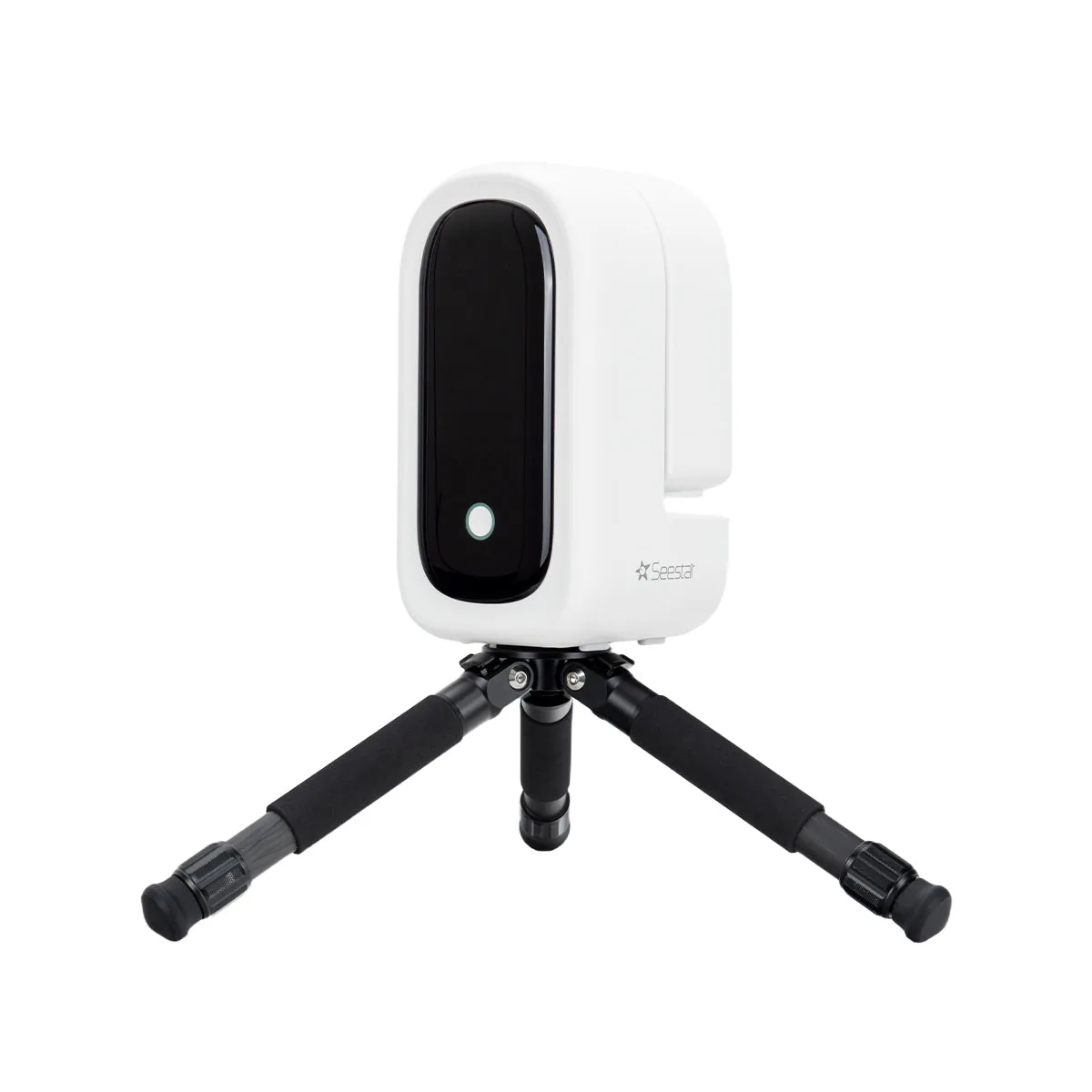
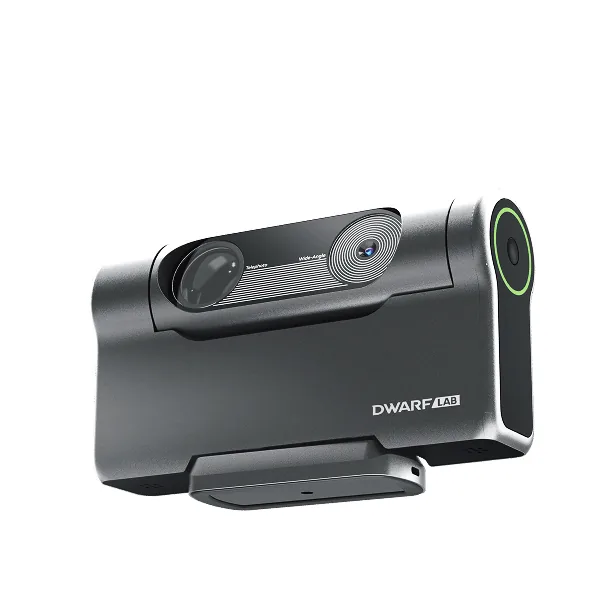
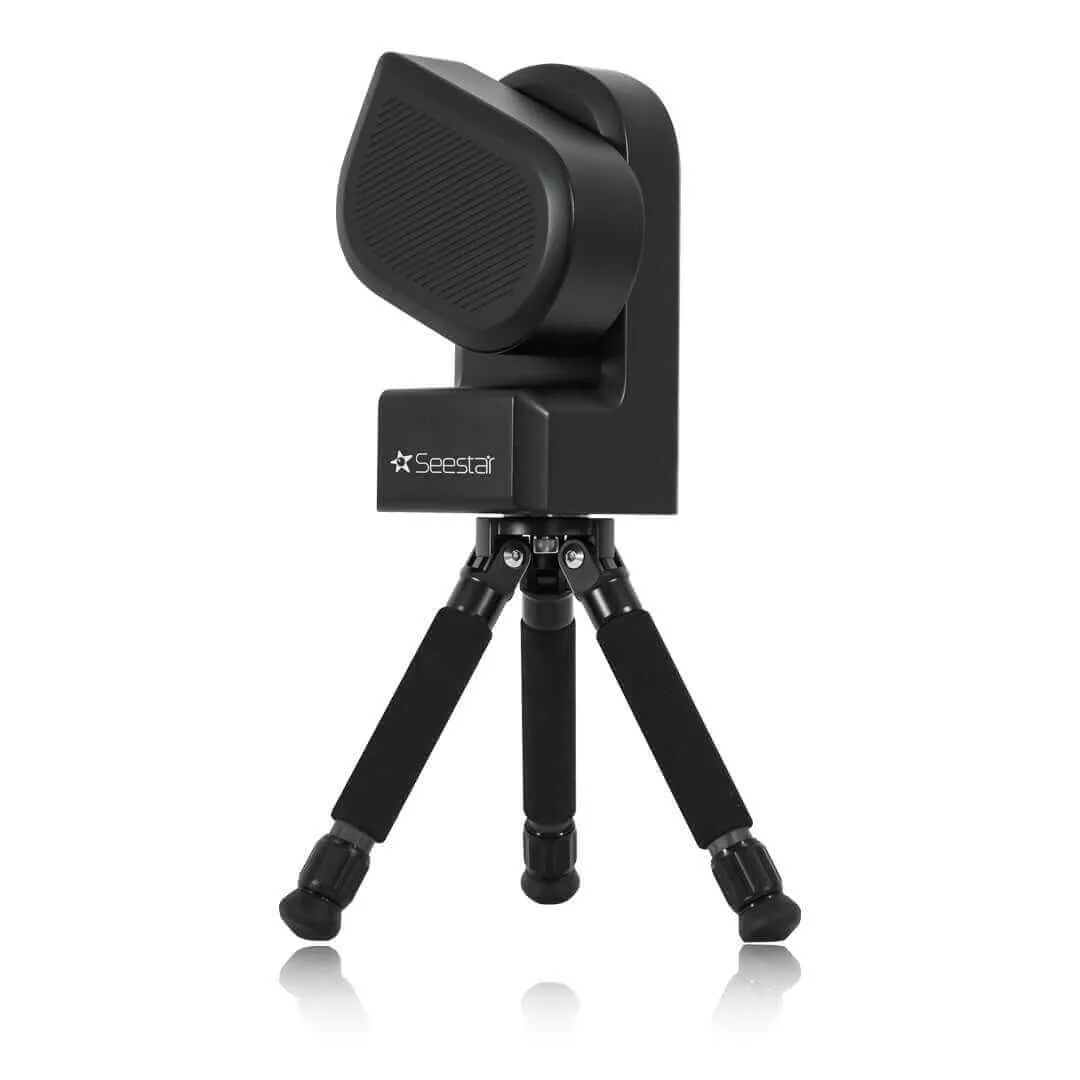
Telescopes mentioned in this guide
Frequently asked questions
Do smart telescopes have an eyepiece?
Most do not: you see the image on a phone or tablet. The Unistellar Odyssey Pro and eVscope 2 add an electronic eyepiece (Nikon Eyepiece Technology, an OLED micro-display).
Do smart telescopes need the internet?
Not for observing: the phone connects directly to the telescope over Wi-Fi or Bluetooth. You may need a connection to download the app, firmware updates or catalogs, and for remote-control features.
Can a smart telescope work in a city?
Yes, with limits. Bright emission nebulae work well with a dual-band filter; faint galaxies need darker skies. Our light pollution guide explains what to expect for each sky.
How long does a smart telescope take to set up?
A few minutes. Celestron says the Origin can start imaging in under two minutes; DWARFLAB says three minutes from unboxing for the DWARF mini.