The nine Bortle classes
| Class | Typical place | What the sky looks like | Smart telescope targets |
|---|---|---|---|
| 1-2 | Remote dark site | Milky Way casts shadows, zodiacal light obvious | Everything, including faint dust and galaxy groups |
| 3-4 | Rural to rural/suburban | Milky Way clearly structured | Galaxies, reflection nebulae, wide Milky Way shots |
| 5 | Suburban | Milky Way faint, washed out near the horizon | Bright galaxies, all emission nebulae, clusters |
| 6-7 | Bright suburban | Milky Way only near the zenith or invisible | Emission nebulae with a dual-band filter, clusters, Moon |
| 8-9 | City | Only the brightest stars and planets | Moon, planets, bright emission nebulae with a filter |
Bortle's original article describes each class by what an observer sees: the Milky Way, the zodiacal light, the faintest stars visible to the eye. Light pollution maps estimate the class from satellite measurements of artificial light, so treat the color on the map as a guide, not a measurement of your exact backyard.
How to find your Bortle class
- Open a light pollution map (several free ones overlay satellite data of night lights on a world map).
- Find your home and note the color zone; most maps give the matching Bortle class or sky brightness.
- Look 20 to 40 minutes' drive away: a darker zone there is worth a trip for galaxies.
- On a clear, moonless night, check yourself: can you see the Milky Way? Count the stars in the Little Dipper.
TipYour neighbor's porch light can matter more than the map. Put the telescope in the shadow of the house, away from direct lights, and let the screen of your phone dim.
What a dual-band filter does, and does not do
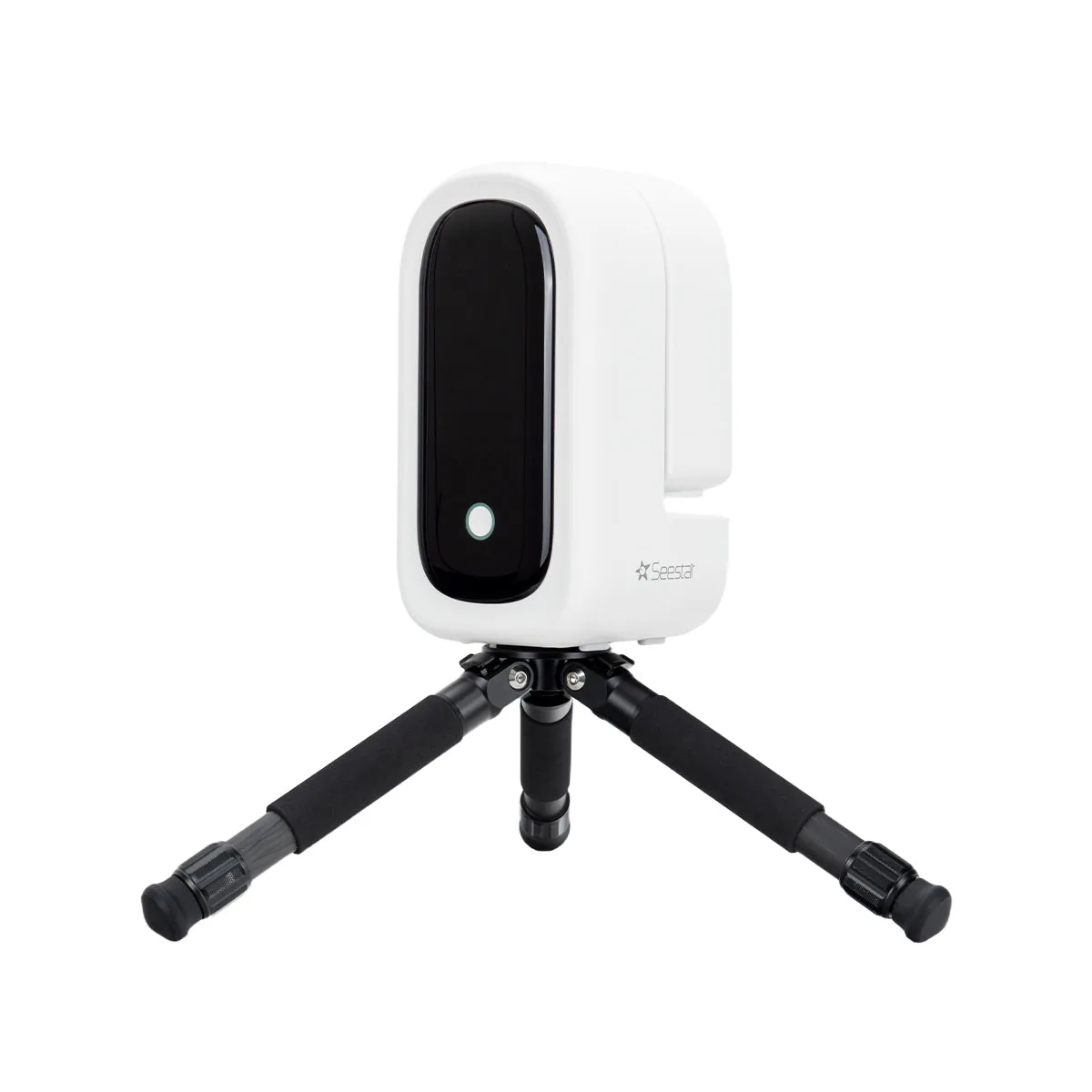
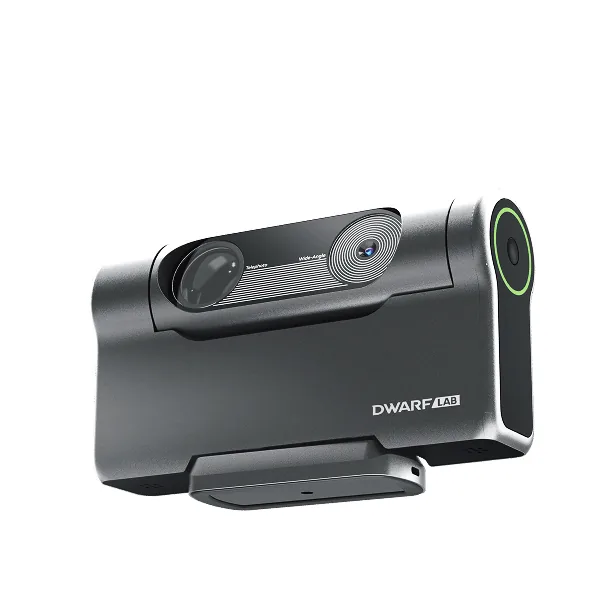
A dual-band filter lets through two narrow slices of light: Hα (656 nm, red) and OIII (around 500 nm, green-blue). Emission nebulae shine strongly at those wavelengths, while most streetlight glow falls elsewhere, so the filter keeps the nebula and drops much of the sky glow. Seestar models have one built in (OIII 30 nm / Hα 20 nm); the DWARF 3 has a dual-narrowband filter at 500.7 nm and 656.3 nm; the DWARF mini at 493 nm and 656 nm.
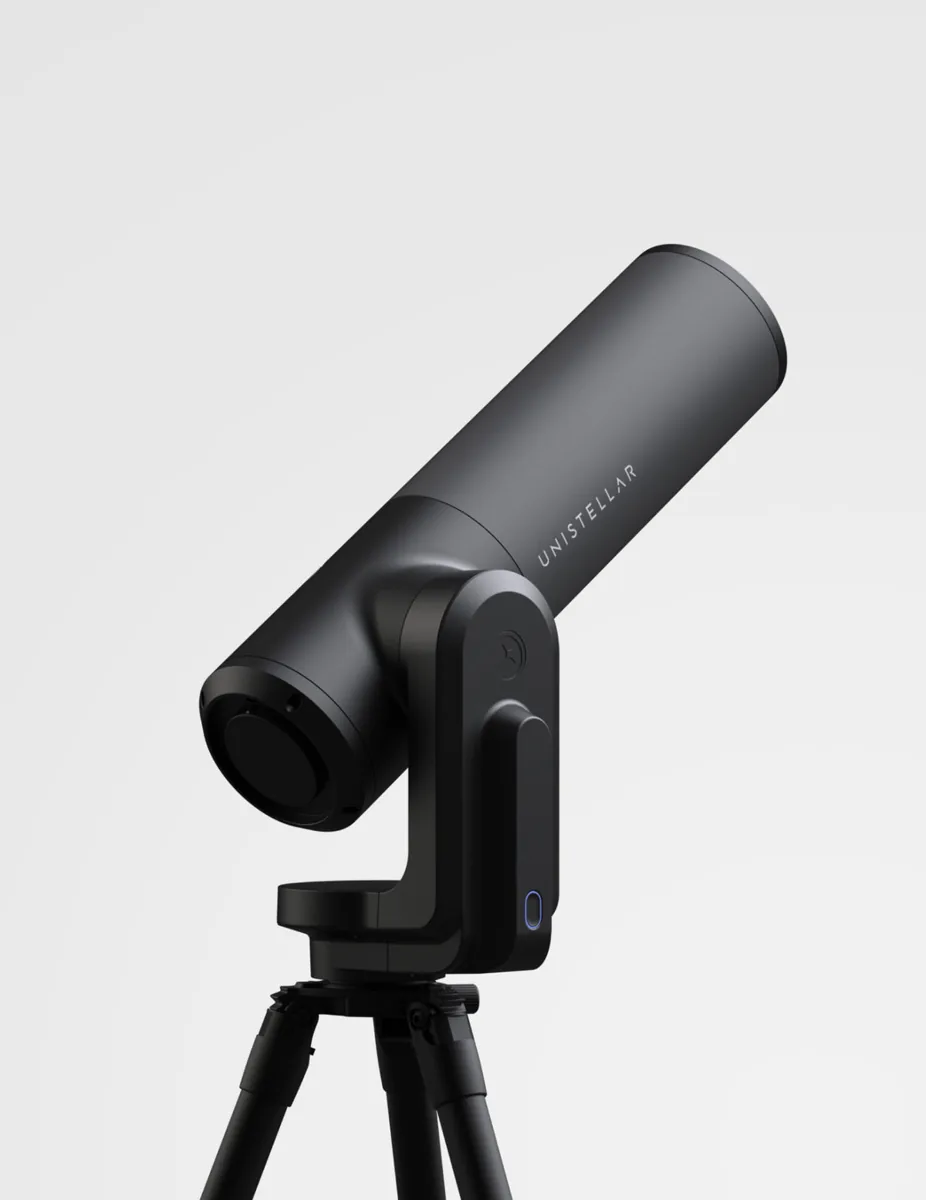
It does little for galaxies, star clusters and reflection nebulae, which emit across the spectrum. For those, darkness is the only cure. Vaonis sells light pollution and dual-band filters as options for its Vespera range, Celestron has a filter drawer on the Origin with a nebula filter sold separately, and Unistellar does not offer a light pollution filter.
| Brand | Light pollution filter |
|---|---|
| ZWO Seestar | Duo-band built in, switched from the app |
| DWARFLAB | Dual-narrowband built in (Draco SHO: S II + O III) |
| Vaonis | Light pollution and dual-band filters sold separately |
| Celestron Origin | Filter drawer (1.25" or 2"), nebula filter sold separately |
| Unistellar | None offered; Smart Solar Filter only |
A first night plan for each sky
Picking the right target for your sky matters more than the telescope you own. Here is a simple plan for a first clear night, whatever model you have.
- From the city: start with the Moon (any phase but full), then one bright emission nebula with the dual-band filter on, such as the Orion Nebula in winter or the Lagoon in summer. Leave it stacking for 30 minutes before you judge the result.
- From the suburbs: add a bright galaxy on a moonless night (Andromeda in autumn, Bode's Galaxy in spring) and a star cluster such as the Pleiades or the Double Cluster, which need no filter at all.
- From a dark site: try the faint ones that show the difference: the Triangulum Galaxy, the Veil Nebula, or a wide Milky Way field with a model that has a wide-angle camera.
TipWrite down the Bortle class and the Moon phase with every image you keep. After a few weeks, you will know exactly which targets are worth a weeknight from home and which ones deserve a drive.
Which telescope for which sky
- City (class 8-9): a model with a built-in dual-band filter, such as the Seestar S50 Pro or DWARF 3, and a target list of emission nebulae, the Moon and planets.
- Suburb (class 5-7): almost any model; filters for nebulae, darker nights for galaxies. Our main ranking covers them all.
- Dark site (class 1-4): aperture pays off. The Celestron Origin Mark II and Unistellar eQuinox 2 gather the most light; light models like the DWARF mini are easy to bring there.
Light pollution also affects how long you stack: the brighter the sky, the more frames it takes to pull a faint target out of the glow. A 30-minute drive to a darker site often does more than any upgrade.
Telescopes mentioned in this guide
Frequently asked questions
What Bortle class do I need for a smart telescope?
None in particular: smart telescopes work from city skies on bright nebulae with a filter. For galaxies, class 5 or darker makes a visible difference.
Does a light pollution filter work on galaxies?
Very little. Galaxies emit light across the spectrum, so a dual-band filter removes much of their light along with the sky glow.
Is the Moon a problem for smart telescopes?
For faint targets, yes. The days around full Moon brighten the whole sky; emission nebulae with a dual-band filter suffer less.
What does Bortle 9 mean?
Inner-city sky: only the brightest stars, the Moon and the planets are visible to the eye. A smart telescope can still image the Moon, planets and bright emission nebulae with a filter.