Head-to-head · updated November 9, 2026
DWARFLAB DWARF 3 vs DWARFLAB DWARF mini
Short answer: the DWARF 3 ($549) is the better telescope: 35 mm against 30 mm, an 8 MP sensor against 2.07 MP, 5.5 hours of battery against 4, and IP54 sealing. The DWARF mini ($419) wins on weight (840 g against 1.35 kg), price and single exposures of up to 90 seconds.
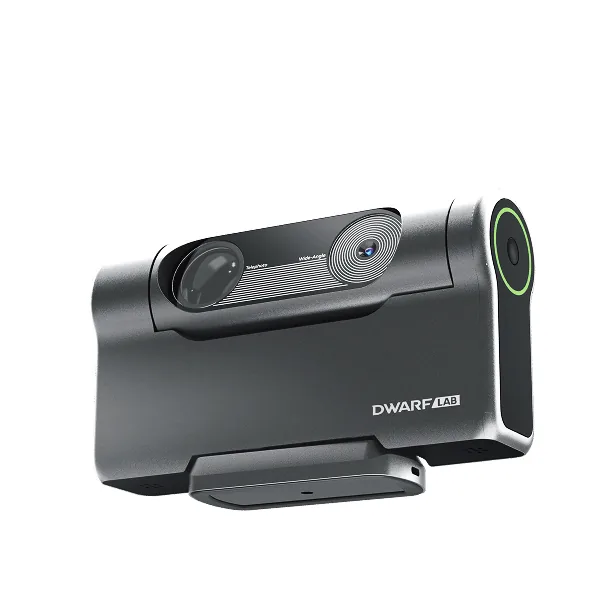
DWARFLAB DWARF 3
8.6Very good · out of 10- Telephoto with a Sony IMX678 Starvis 2 sensor (737 mm equivalent) plus a 45 mm-equivalent wide camera
- Three filters built in, including a dual-narrowband filter for city skies
- Up to 60 s exposures, Equatorial Mount Mode and IP54 protection, at 1.35 kg
Better on 7 of 19 lines · $549 on November 9, 2026
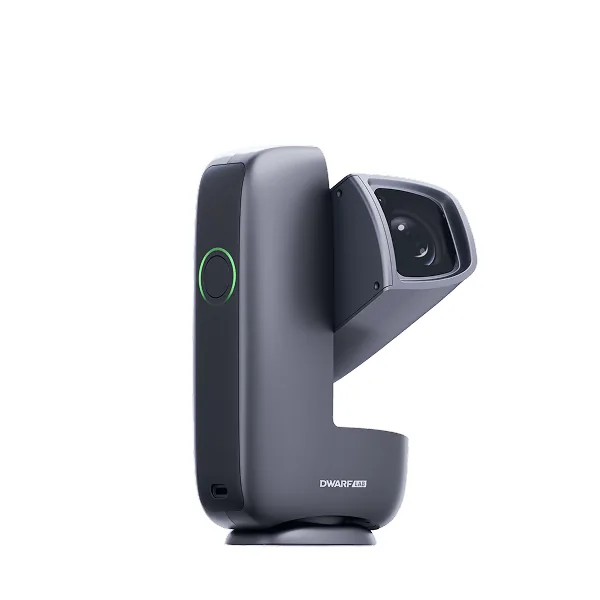
DWARFLAB DWARF mini
8.2Good · out of 10- 840 g body, the lightest smart telescope in our list
- Dual-narrowband filter built in and exposures of up to 90 seconds
- GoTo, tracking and one-tap post-processing from the DWARFLAB app
Better on 3 of 19 lines · $419 on November 9, 2026
Some links are affiliate links: we may earn a commission at no extra cost to you. It never changes our scores.
Spec by spec
| Criterion | DWARF 3 | DWARF mini |
|---|---|---|
| Calculated score | 8.6/10 | 8.2/10 |
| Checked price | $549 | $419 |
| Aperture | 35 mm | 30 mm |
| Focal length | 150 mm (f/4.3) | 150 mm (f/5) |
| Main sensor | Sony IMX678 Starvis 2 (1/1.8") | Sony IMX662 (1/2.8") |
| Native resolution | 8 MP | 2.1 MP |
| Image scale | 2.75″ per pixel | 3.99″ per pixel |
| Field of view | 3.38° diagonal (telephoto) | 2.45° diagonal (telephoto) |
| Wide-angle camera | Yes | Yes |
| Light pollution filter | Built in | Built in |
| Equatorial mode | Yes | Yes |
| Longest exposure stated | 60 s | 90 s |
| Battery life | 5.5 h | 4 h |
| Weight | 1.35 kg (3 lb) | 0.84 kg (1.9 lb) |
| Storage | 128 GB | 64 GB |
| Eyepiece | No | No |
| Focus | Autofocus | Autofocus |
| Tripod in the box | No | No |
| Warranty | 2 years | 2 years |
★ marks the better figure on that line (10 lines can be compared). Specs as published by the makers; prices checked on November 9, 2026.
What the numbers mean
Both run the same DWARFLAB app with equatorial mode, multi-night stacking and one-tap post-processing, and neither includes a tripod. The difference you will see first is the image: the DWARF 3's Sony IMX678 records 8 MP at about 2.75″ per pixel, the mini's IMX662 2.07 MP at about 4″.
If you mostly hike, travel or birdwatch, the mini's weight is a real argument. For a backyard telescope you use every clear night, the DWARF 3 is worth the extra $130.
Our pick for each kind of buyer
DWARFLAB DWARF mini
DWARF mini costs $130 less than the DWARF 3, at prices checked on November 9, 2026.
Read the review →DWARFLAB DWARF 3
DWARF 3 scores 8.6/10 against 8.2/10 with our published formula.
Read the review →DWARFLAB DWARF 3
DWARF 3 has 35 mm of aperture against 30 mm and an image scale of 2.75″ per pixel against 3.99″: smaller numbers mean more detail on Jupiter and Saturn.
Read the review →DWARFLAB DWARF mini
DWARF mini weighs 0.84 kg (1.9 lb) against 1.35 kg for the DWARF 3, tripod excluded.
Read the review →DWARFLAB DWARF 3
DWARFLAB states 5.5 hours of battery for the DWARF 3, against 4 hours for the DWARF mini.
Read the review →Questions
Which is better, the DWARF 3 or the DWARF mini?
With our published overall formula, the DWARF 3 scores higher (8.6 vs 8.2/10). The best pick still depends on what you observe: see the picks by profile on this page.
What is the price difference between the DWARF 3 and the DWARF mini?
On November 9, 2026, the DWARF 3 was $549 at the DWARFLAB US store and the DWARF mini $419 at the DWARFLAB US store.
Which has more aperture?
The DWARF 3 has 35 mm against 30 mm, so it collects about 1.4 times more light.
Which one is lighter?
The DWARF mini: 0.84 kg against 1.35 kg, tripod excluded, as stated by the makers.