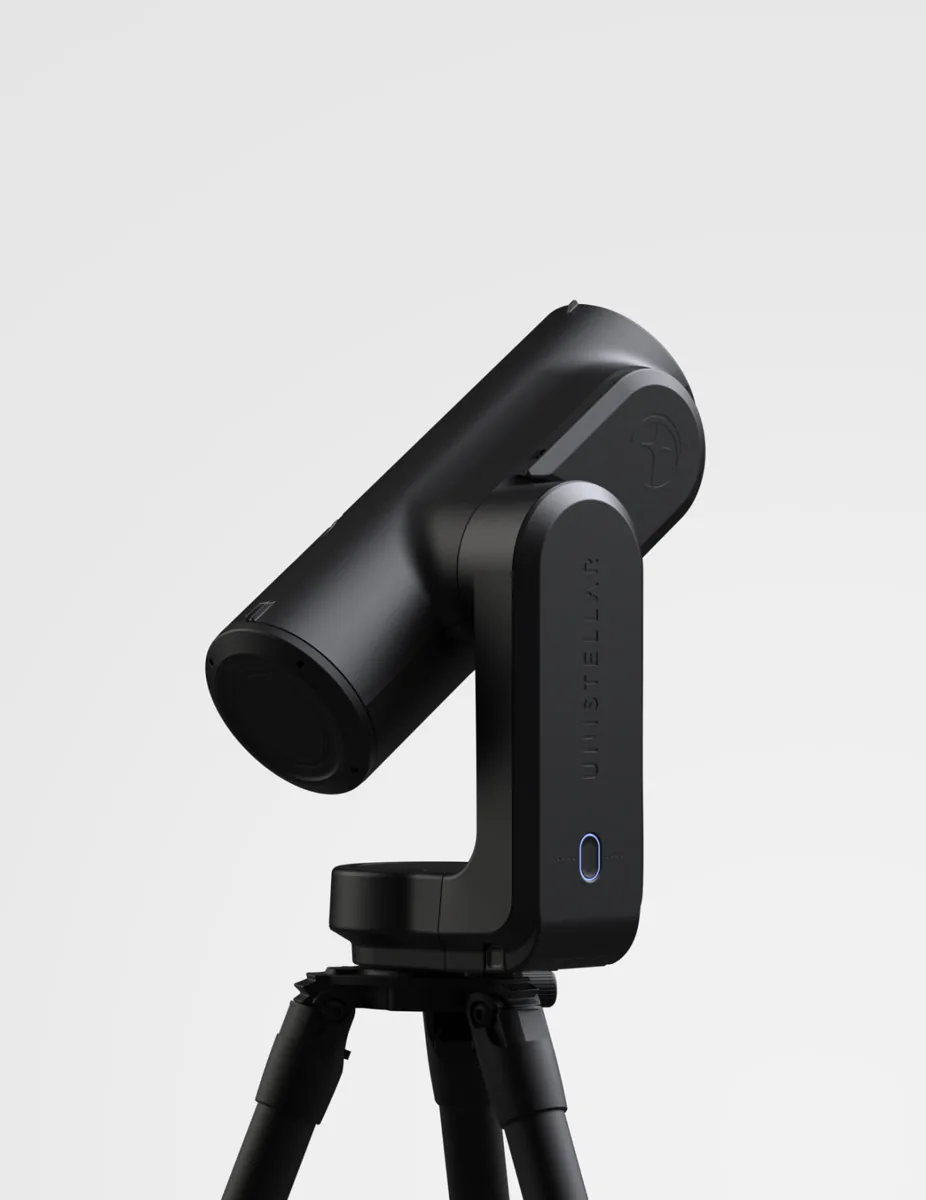
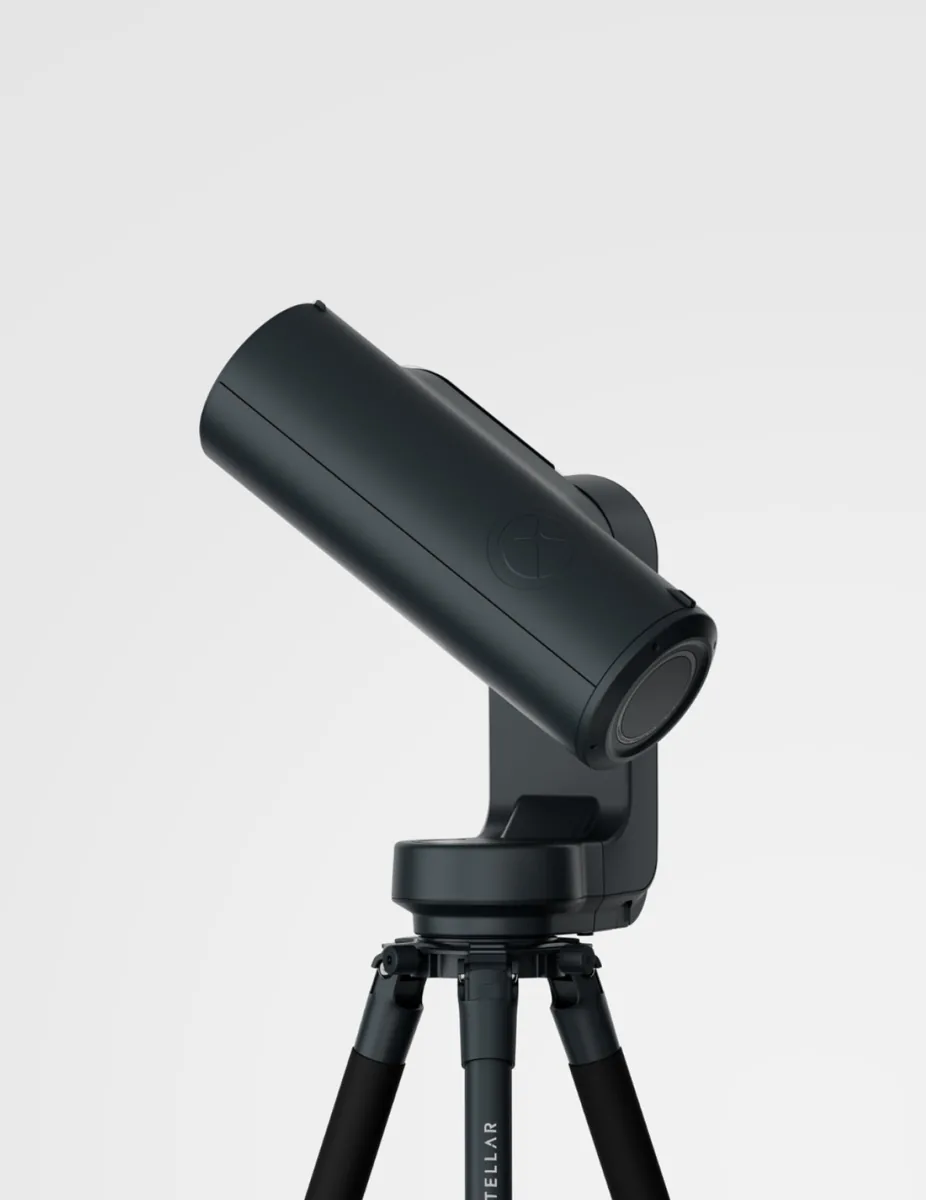
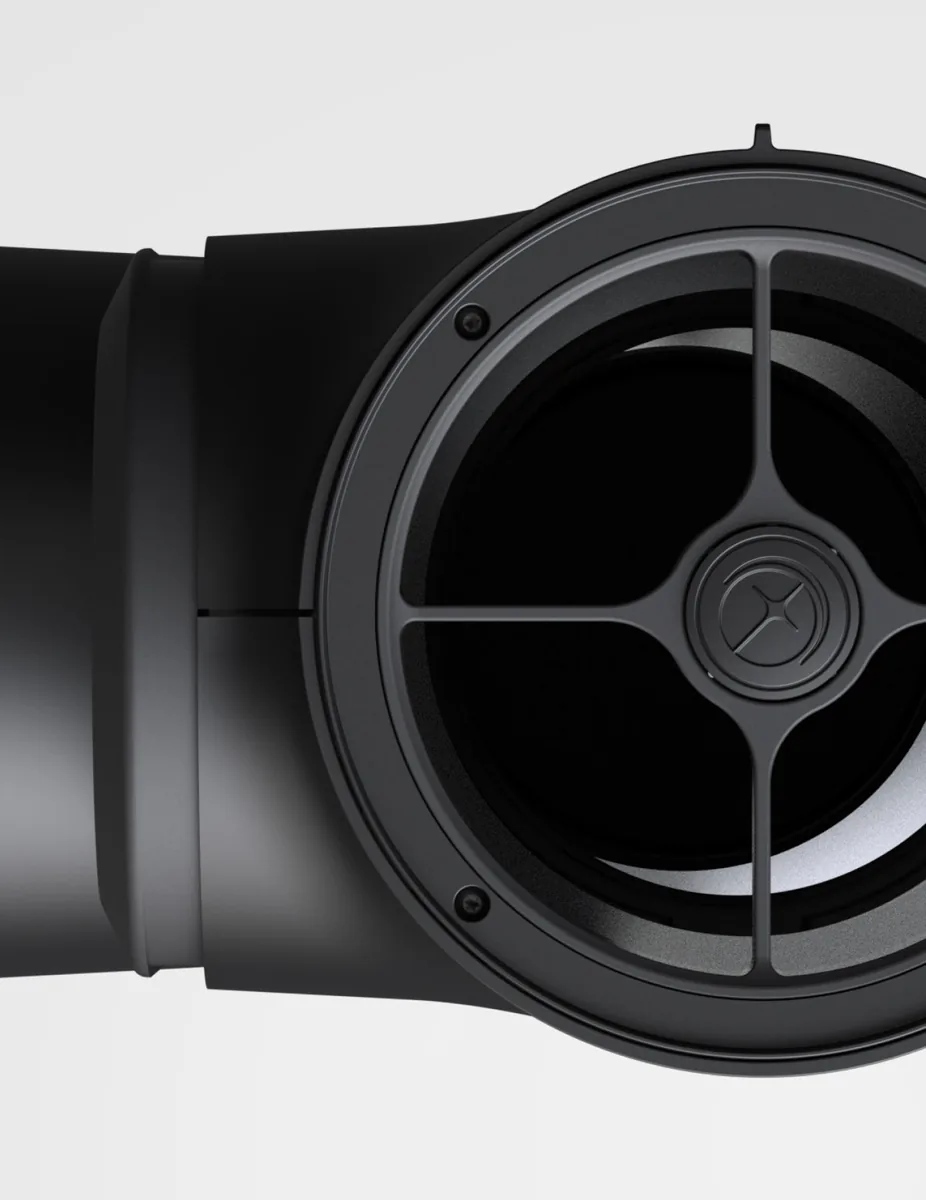
What a night with it looks like
Unistellar sells "live observation": the telescope finds a target from a catalog of more than 5,000 objects, and Dynamic Signal Amplification brightens faint light in real time, so the view deepens while you watch. Smart Star Finder points and tracks from the moment it is on, even with few stars visible, and you can also steer around the sky by hand from the app.
Optically, the 85 mm mirror at f/3.9 has a resolving power of 1.68″ and a stated sampling of 0.93″ per pixel, the finest in our list. That is why Unistellar rates the Odyssey "excellent" for the Moon and planets on its own comparison page. Raw data can be downloaded as FITS, TIFF or PNG for processing.
The catch
No light pollution filter is offered, built in or optional (only a Smart Solar Filter, $159 on sale). Unistellar leans on software for city skies; for emission nebulae under orange skies, a dual-band filter is a big help that you cannot add here.
The field of view is small: 33.6′ × 45′, about 0.56° × 0.75°. The Andromeda Galaxy, the Pleiades or the North America Nebula do not fit. Unistellar does not publish the sensor resolution, only a 1.45 µm pixel size.
How it scores
Unistellar Odyssey gets 8.4/10 (good) with our overall weights. Each criterion below is scored out of 10 from Unistellar's published figures; a criterion without a figure is left out and the other weights are rescaled. The scales are on the methodology page.
| Criterion | Weight | Score /10 | Bar |
|---|---|---|---|
| Aperture | 27.8% | 8.0 | |
| Sensor resolution | 10% (left out) | Not stated | |
| Image scale (detail) | 11.1% | 10.0 | |
| Light pollution filter | 11.1% | 2.0 | |
| Battery life | 11.1% | 5.0 | |
| Portability (weight) | 11.1% | 6.8 | |
| Tracking mode | 5.6% | 5.0 | |
| Warranty | 5.6% | 7.0 | |
| Price | 16.7% | 5.2 |
By use, with the same figures and different weights: for beginners 8.2/10 (No. 10), for astrophotography 8.5/10 (No. 8), for planets 9.1/10 (No. 2).
Full specifications
As published by Unistellar on its US pages, read on November 9, 2026.
| Optical design | Reflector, 85 mm mirror, Nikon optics |
|---|---|
| Aperture | 85 mm (3.3 in) |
| Focal length | 320 mm, f/3.9 |
| Pixel size | 1.45 µm |
| Field of view | 33.6′ × 45′ |
| Image scale | 0.93″ per pixel (stated by Unistellar) |
| Limiting magnitude | 17.2 (stated by Unistellar) |
| Wide-angle camera | No |
| Filters | No light pollution filter listed; Smart Solar Filter sold separately |
| Mount and tracking | Motorized alt-azimuth |
| Focus | Automatic (Stellar Autofocus), no collimation needed |
| Eyepiece | No, view on phone or tablet |
| Battery | 5 hours (Unistellar) |
| Storage | 64 GB |
| Weight | 4 kg (8.8 lb), telescope, tripod not included in the figure |
| Tripod in the box | Yes |
| In the box | Telescope, Unistellar tripod, Dust cap, Charging cable, Adjustment tools |
| Warranty | 2 years (Unistellar US store); UNISTELLAR Care extension sold at checkout |
| Checked price | $2,079 (list price $2,599) on November 9, 2026 |
| Availability | In stock at the official US store |
Buying advice
List price $2,599, sale price $2,079 on the Unistellar US store on November 9, 2026 (Black Friday, "limited time", no end date stated), with a tripod, a 2-year warranty, 30-day returns and free shipping.
- 85 mm Nikon-optics reflector with Stellar Autofocus: no focusing or collimation, according to Unistellar
- You observe on a phone or tablet; up to 10 people can follow the same view, per Unistellar
- 5 hours of battery, 4 kg telescope, premium tripod included
Alternatives to consider
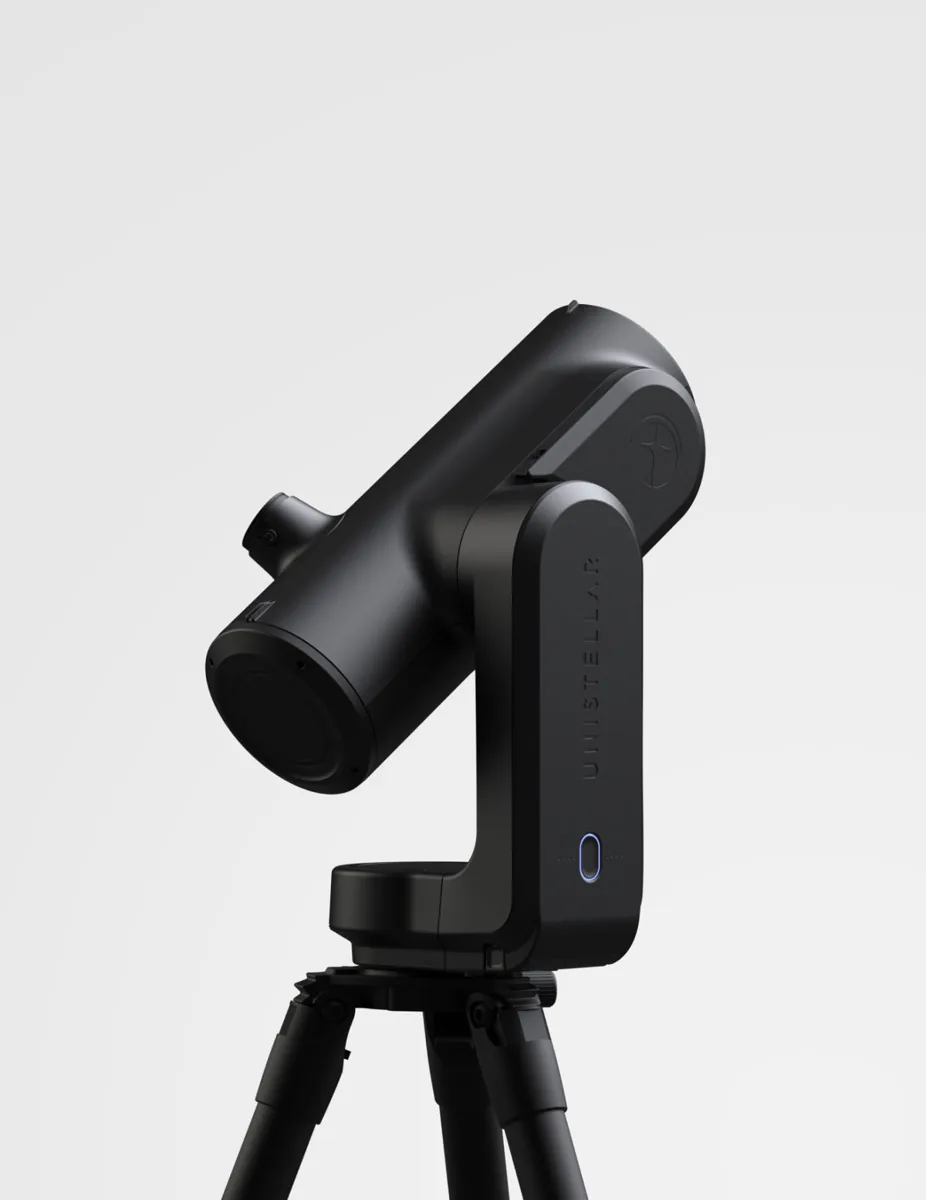 Unistellar Odyssey Pro8.2Good · out of 10
the same telescope with the Nikon eyepiece, $3,679 on sale.
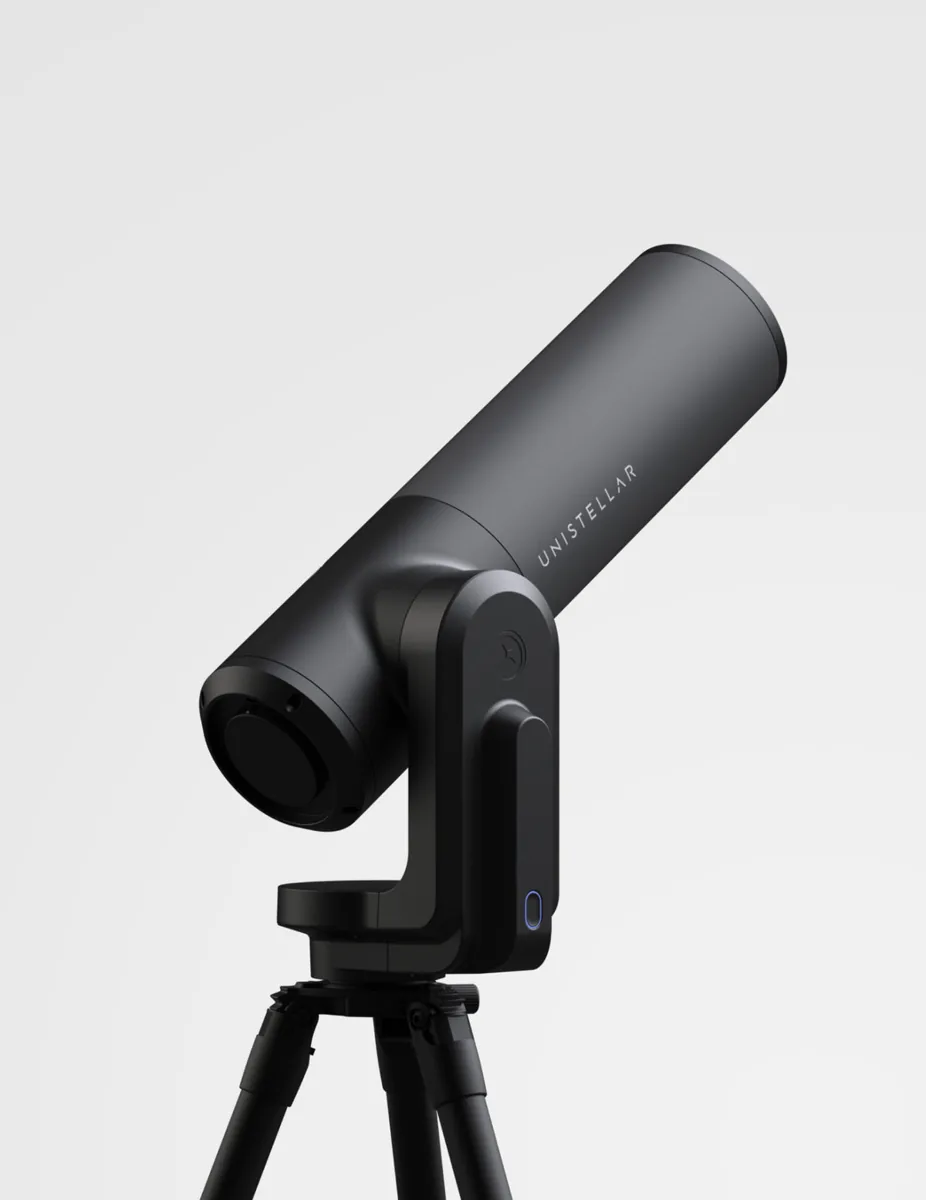 Unistellar eQuinox 28.5Very good · out of 10
114 mm, 11 hours, $2,319 on sale.
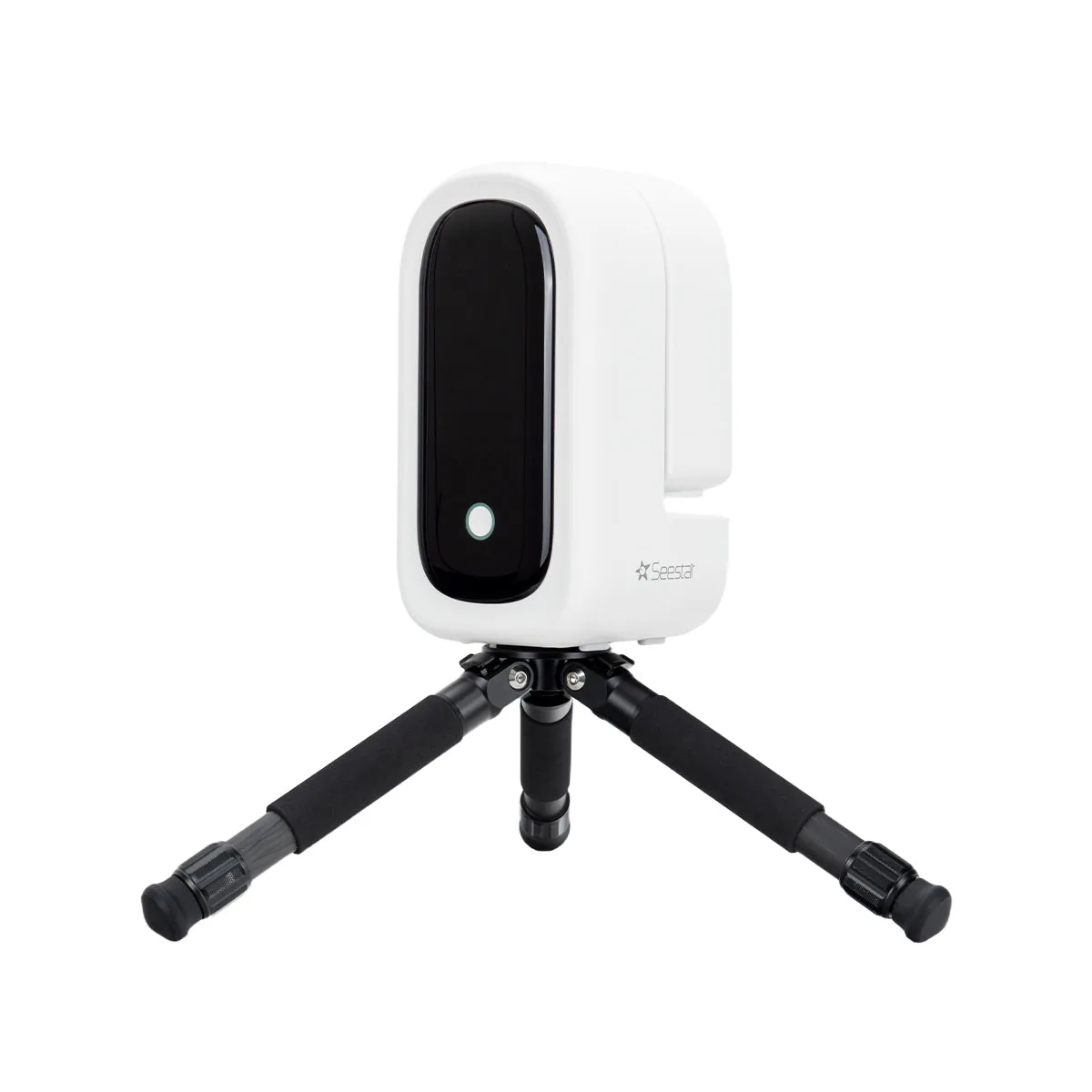 ZWO Seestar S50 Pro8.8Very good · out of 10
$999, filter and wide camera, but 50 mm.
Questions about the Unistellar Odyssey
Unistellar Odyssey or Odyssey Pro?
Same 85 mm telescope, same autofocus and battery. The Pro adds Nikon Eyepiece Technology, an OLED micro-display eyepiece on the tube, for $1,600 more at list price. If you are happy looking at a phone or tablet, the Odyssey is the better value.
Can the Unistellar Odyssey see planets?
It is one of the better smart telescopes for them on paper: 85 mm of aperture and 0.93″ per pixel. It ranks second in our planet ranking.
Sources
Official pages read on November 9, 2026: shop.unistellar.com/products/odyssey · www.unistellar.com/compare. Product images: Unistellar.